21/10/2026 13:19
Where Should We Meet? Telegram Live Location for Cambodian Mobile Bicycle Repairs
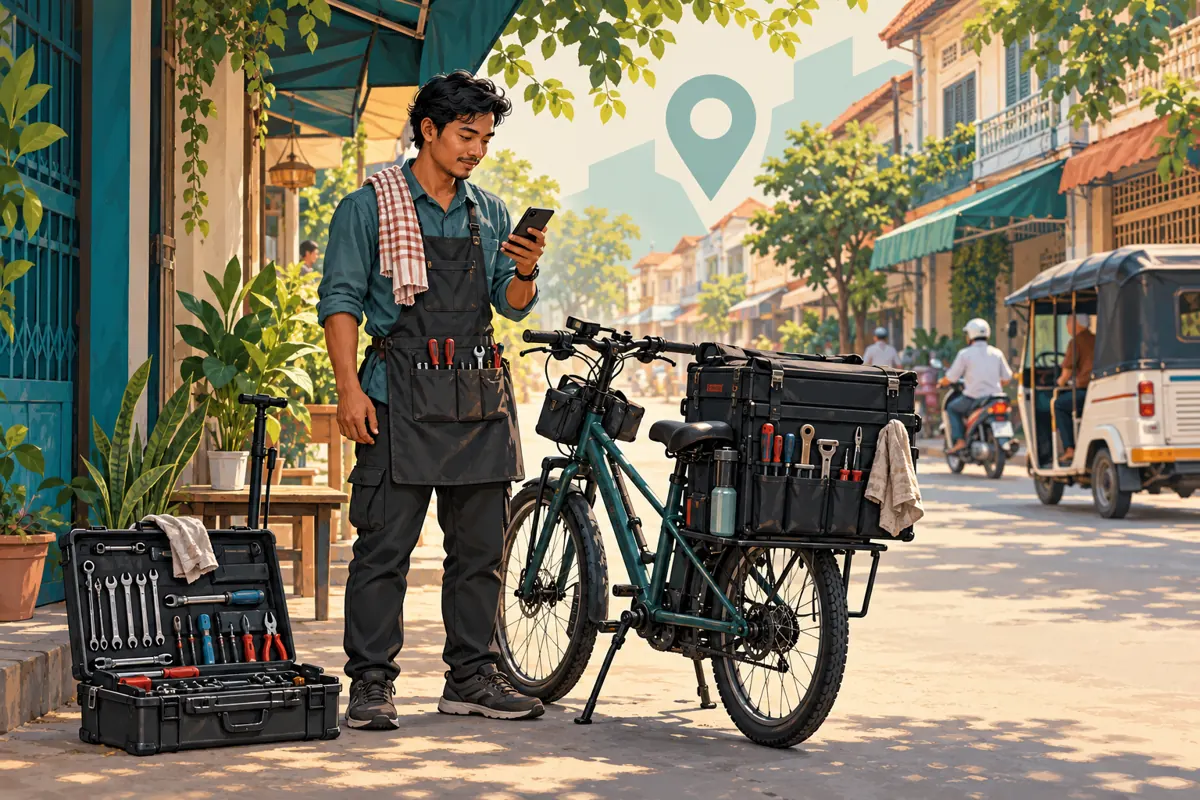
A mobile bicycle-repair promotion can explain the work clearly and still leave a customer wondering where to meet the mechanic. A workshop address, an agreed meeting point and a worker’s current position answer different questions. Mixing them up can send someone to an empty counter or encourage them to follow a moving worker who has another appointment. For Cambodian businesses promoting visits through Telegram, live location can help with the final meeting after the work and timing are agreed. This guide uses a hypothetical mobile repair business in Phnom Penh to show how to connect a public promotion, a private enquiry and a temporary location share without confusing attention with bookings.
1. Make the public promotion explain the service boundary
Start with information that remains useful while the mechanic moves around. Explain the areas currently served, the kinds of bicycle problems the business can assess, how customers request a visit and whether appointments require confirmation. A photograph of a toolkit may attract attention, but it does not explain whether a customer should visit a workshop or wait for a mechanic. Give the reader a clear next action: send a description of the problem and a general meeting area.
In the hypothetical example, the business posts a short demonstration of a puncture inspection and invites enquiries about mobile visits. The caption explains that travel arrangements and any applicable charges are confirmed before departure. It does not announce that the mechanic is available wherever a map marker happens to appear. For Khmer-speaking customers, prepare a clear Khmer version of those practical instructions and check that both versions describe the same service.
2. Choose between an address, a fixed pin and live location
Use a workshop address when someone needs to find a permanent counter. Use a fixed map pin when both parties need to identify one agreed entrance or meeting point. Consider live location when the remaining problem is locating a person who is travelling toward that meeting. Telegram’s official live-location introduction distinguishes an updating position from a static location. A moving marker should therefore support an existing arrangement, rather than define where an unconfirmed customer must go.
Apply a simple decision rule before sending anything: what information would resolve this customer’s uncertainty? If the customer asks which entrance to use, a fixed pin with a short landmark description may be enough. If the mechanic is approaching an agreed meeting and the customer wants to coordinate the handover, temporary live sharing may help. If the repair has not been accepted, clarify the appointment first. More detailed location information cannot resolve missing availability or an unsuitable repair request.
3. Confirm the repair visit before sharing movement
Move the practical discussion into the intended customer conversation. Ask what happened to the bicycle, request a relevant photograph when useful and establish whether the bicycle can be brought to the proposed meeting point. Confirm that the mechanic has the appropriate equipment or needs further information. Avoid promising a completed repair solely from a photograph; an inspection may reveal a different problem or a required replacement part.
The hypothetical customer reports a flat rear tyre near a workplace. The mechanic first agrees an accessible entrance and a visit window, then explains what will happen on arrival. A useful confirmation might say: “We have agreed to meet at the entrance shown in your fixed pin. I will message before leaving and can share my location during the final approach.” This is an illustrative message, not a real customer exchange. It establishes the meeting without making continuous tracking a condition of receiving service.
4. Start a limited share in the correct conversation
Telegram’s official instructions describe opening the attachment menu in a private chat or group, selecting Location and choosing the live-location sharing option. Before sending, check the conversation identity and the duration offered by your app. Interface wording can differ with language and version. For a customer appointment, choose a finite period appropriate to the meeting instead of selecting a longer period merely because it is available.
Do the setup while stationary. Add a short explanation of whose position is being shared and why: the mechanic’s approach to the agreed entrance, for example. Ask the recipient to confirm that they can open the location. Check that the map position is plausible before relying on it, especially when several nearby entrances look similar. If the customer cannot use the map, switch to a landmark description and a direct arrival message. The appointment should remain understandable without requiring either person to interpret a moving marker.
5. Keep customer coordination separate from the public audience
A public channel is useful for explaining the service, showing repair demonstrations and announcing confirmed availability. An individual customer’s meeting details serve a much narrower purpose. Keep exact entrances, personal addresses and temporary movement in the conversation used to arrange that visit. A customer asking for help finding the mechanic has not automatically agreed to have their location turned into promotional content.
Telegram’s privacy policy says live-location information can continue to be shared while the app is closed for as long as the feature remains active. Closing the app should therefore not be your end-of-visit procedure. Explain the intended sharing period to the worker and customer, and let either person choose a fixed pin instead. If several staff members need to coordinate, consider who actually needs the location before using a group. Convenience alone is a poor reason to expose a journey to a broader audience.
6. Treat a stalled marker as a communication problem
A location display is not a promise of arrival time. If the marker appears implausible or stops changing, avoid telling the customer that the mechanic must be stationary at that point. Check the phone’s connection, location permission and sharing state while safely stopped. Then send a direct update explaining what is known. For example, say that the mechanic has reached the agreed landmark, rather than making the customer infer arrival from the map.
Keep a fallback message ready with the meeting point, a recognizable entrance and the next action. In the hypothetical visit, two entrances face different streets. The mechanic sends an entrance description and asks the customer to confirm which side they are using. Neither person keeps moving toward the other’s last marker. If the meeting location changes, write out the new agreement clearly. This prevents a small navigation problem from turning into an unclear cancellation or an unnecessary journey.
7. End sharing when the meeting purpose ends
Telegram’s later feature announcement says an existing live-location share can be extended and that indefinite sharing is available until turned off. For a short repair visit, that flexibility makes a deliberate closing check worthwhile. Once the parties have met, or once the appointment is cancelled, use the stop-sharing control and verify the sharing state. Do not leave the session running simply because there is still time remaining.
Make this part of the worker’s normal handover: confirm arrival, end location sharing and continue with the inspection or agreed service. Stopping updates should not be treated as erasing information the recipient has already seen. Keep the business record focused on the appointment outcome, the work agreed and any necessary follow-up. A detailed trail of movement is usually unnecessary for deciding whether the public promotion explained the service well. Avoid copying location screenshots into campaign reports.

8. Recognize what an SMM panel listing cannot solve
A business considering khmerboosting.com may encounter the exact listing “Telegram - Channel/Group Members ~ Max 150k ~ 𝗥𝗘𝗙𝗜𝗟𝗟 90D ~ 15k/days ~ INSTANT”. The supplied catalogue places it in a Telegram member category, but provides no supporting description. Treat the wording as the listing’s label, not verified evidence of delivery speed, retention, customer intent or service quality. It does not establish that a location-sharing or appointment-management service is available.
That distinction matters for this workflow. A member-related purchase cannot confirm that the mechanic and customer have agreed a meeting, and a larger member count cannot show whether the entrance instructions worked. Purchased engagement is not evidence of genuine interest, sales, advertising delivery or Cambodian users. Do not use it to imply local demand or customer endorsement. If reviewing any panel offer, assess its current terms and applicable platform rules separately, and keep exact customer locations out of service inputs and support material.
9. Review the promotion through actual appointment questions
After a genuine enquiry, ask where the customer found the service when that question fits naturally. Record the answer as reported, rather than assuming that the latest post caused the contact. Track practical outcomes such as an enquiry needing clarification, a visit being confirmed, a meeting being completed or a request falling outside the service area. These categories help identify what to explain better without manufacturing a success rate.
Review repeated misunderstandings. If people keep asking whether they should visit the workshop, clarify the difference between counter service and mobile visits in the next promotion. If customers repeatedly choose the wrong entrance, improve the meeting instruction. If enquiries concern repairs the mechanic cannot perform on site, narrow the advertised scope. Keep any SMM purchase history in a separate record. Changes in channel membership should not be used to explain appointment outcomes unless there is evidence connecting the two.
10. Fix the common mistakes before promoting another visit
The first common mistake is sharing movement too early. A customer has asked about availability, but the business responds with a live pin before confirming the job. The second is sharing to the wrong audience, such as a broad group used for general announcements. The third is leaving an indefinite session active after the meeting. Prevent these with three checks at the moment of sharing: confirmed purpose, intended recipient and suitable duration.
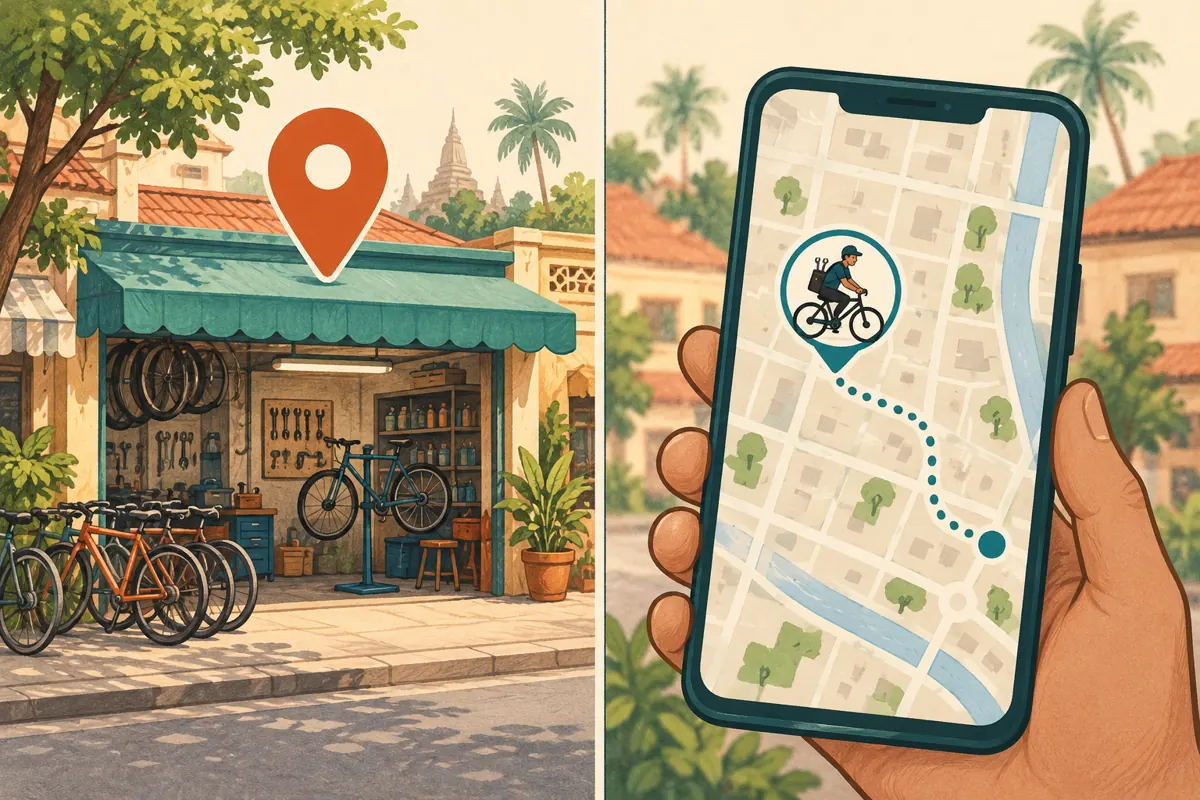
Another mistake is presenting an illustrated map as evidence of a completed customer visit. The images accompanying this guide are explanatory illustrations, not customer records or exact Telegram interface screenshots. Use real operational evidence for internal reviews, and obtain appropriate permission before using identifiable customer material publicly. Before another promotion, test the enquiry route with a colleague: can they understand the service area, request a visit and identify when the appointment becomes confirmed? Resolve any ambiguity before attracting more enquiries.

Frequently asked questions
Does a live-location message mean a repair appointment is confirmed?
No. Confirm the requested work, meeting point, timing and relevant visit conditions in words. A location message helps people find each other, but does not communicate whether the mechanic has accepted the job or brought the necessary equipment. If those details remain unclear, settle them before departure.
Must the customer share their own live location?
No. A fixed meeting pin and a useful entrance description may provide everything needed. Offer live sharing only when it resolves a practical coordination problem and the person wants to use it. Do not make continuous movement sharing the default requirement for an ordinary repair enquiry.
Should a mechanic leave sharing active for the whole working day?
For individual customer visits, a shorter share is usually easier to manage. An all-day session can reveal movements unrelated to that customer’s appointment. Set the duration around the meeting purpose and stop it when that purpose ends, even if the selected period has not expired.
Can additional Telegram members prove that the promotion reached local cyclists?
No. Membership alone does not establish location, interest in bicycle repair or willingness to book. Purchased membership should not be presented as proof of Cambodian demand. Use voluntary customer explanations and documented enquiry outcomes to understand whether the promotion is reaching people the business can actually serve.
Explore the current service catalogue, create an account, or ask a specific question through support tickets.
- Telegram: Live Locations, Media Player and Languages
- Telegram: My Profile, Recommended Channels and 15 More Features — Share Location Indefinitely
- Telegram Privacy Policy — Location Data
Prepared with AI assistance. Illustrations explain the workflow and do not represent customer results.