22/10/2026 11:58
Who Can Add to the Demo Playlist? YouTube Collaboration for Cambodian Bead Shops

A bead shop’s demonstration collection can become confusing when several people contribute. The owner adds a cord-selection guide, a tutor adds a knot lesson, and an assistant includes a beautiful bracelet made with supplies the shop does not stock. Each contribution may be useful, yet the combined playlist can send buyers in different directions. For Cambodian shops promoting tutorials through social posts and customer messages, deciding who may add videos is an editorial decision. This workflow explains how to collect contributions, review their relevance, and prepare a dependable customer guide before considering any paid promotion.
1. Give the collection one customer problem
Start with a question narrow enough for every contributor to understand: “How do I choose cord that passes through these beads?” That creates a stronger brief than “Add useful jewellery videos.” A focused collection can show the bead opening, compare suitable cord, and demonstrate threading. Decorative inspiration belongs elsewhere unless it helps answer that same question. Write the intended outcome before inviting anyone, so contributors can judge their own suggestions.
In a hypothetical Phnom Penh shop, the owner and a visiting tutor prepare a guide for beginners buying loose beads. The owner knows which materials are available; the tutor knows where learners get stuck. Their combined knowledge is valuable, but neither a polished video nor a familiar presenter automatically makes a contribution suitable. The collection needs to match the products, language and buying questions the shop can actually support.
2. Choose between collecting suggestions and opening collaboration
Use ordinary suggestions when contributions are occasional. A tutor can send a video link with a sentence explaining its purpose, and the owner can decide whether to include it. This keeps the process simple when one person already handles all customer-facing content. Collaboration becomes more useful when several trusted people regularly assemble lessons and need a shared place to collect them.
For a busy workshop team, consider two separately maintained playlists: a collection for review and a finished customer guide. The owner manually selects approved videos for the guide. This is a recommended editorial arrangement, not an automatic approval feature. Give the collections clearly different names and record their links together. Otherwise, an assistant may promote the working collection simply because its title looks almost identical to the finished one.
3. Check shareability before sending invitations
YouTube’s official collaboration instructions say to open the playlist, select Share, then Invite collaborators. A playlist must be unlisted or public before the invitation is sent. Collaborators can add videos and remove their own additions; the owner can remove contributed content. Send invitations deliberately to the people doing the work, accompanied by the collection’s purpose and review rules.
YouTube’s privacy guidance explains that anyone with an unlisted playlist link can watch and share it. Treat an unlisted review collection as material that could circulate. Exclude confidential customer designs, addresses, order discussions and unreleased commercial information. For the hypothetical bead shop, a generic threading demonstration is appropriate; a recording discussing a customer’s private wedding order is not. Keep confidential review work in a suitably restricted workflow instead of relying on an obscure playlist name.
4. Give contributors a practical selection brief
Ask each contributor to supply the video link, the question it answers, the materials shown, and any limitation a buyer should know. A useful note might say: “Shows threading with a stiff cord end; does not demonstrate soft elastic.” Another might explain that the bead shape is comparable but the exact colour is unavailable. These notes help the owner distinguish an instructional example from a product recommendation.
For Khmer-speaking customers, review whether the action remains understandable without English narration. A close view of the bead opening may communicate more than a long introduction. If explanation depends on specialist terms, plan a clear Khmer explanation using the terminology your customers understand. Do not assume a contributor’s fluent presentation guarantees accurate measurements or suitable materials. Ask them to identify uncertainties rather than filling gaps with confident guesses.
5. Review the demonstration against the physical product
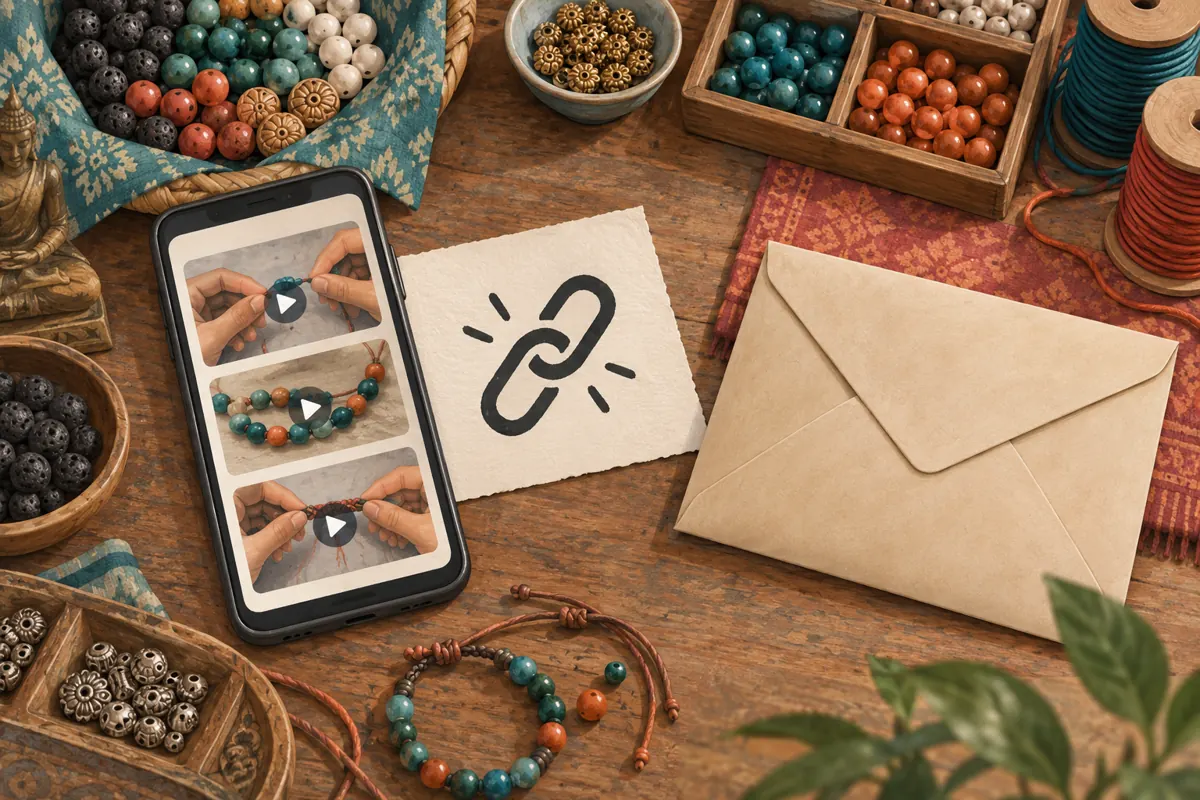
Watch a proposed video while handling the relevant stock. Check whether the cord, opening and threading method correspond to what the shop intends to recommend. Look for a hidden preparation step, such as stiffening a cord end, that changes the result. If the demonstration uses a different material, decide whether that difference can be explained briefly or makes the clip unsuitable for this collection.
In a hypothetical review, the tutor submits a clear threading lesson using a large-hole bead. The shop’s featured bead has a smaller opening. The lesson may still teach a general technique, but it should not become the main compatibility guide without a matching demonstration. Record a concrete decision: include as background, request a closer example, or leave out. This is more useful than marking a clip “good” and expecting another employee to infer the conditions.
6. Decide whether voting serves the guide
YouTube’s collaboration help says ranked voting can influence playlist order and is enabled by default for collaborative playlists. Available settings include Everyone, Collaborators only and Off. Check this before using the collection as an instructional sequence. A popular finished bracelet may attract attention while explaining little about the preparation a beginner needs first.
For a guide that depends on a learning sequence, disabling voting is a sensible editorial choice. In a collection intended to gather workshop preferences, voting may serve a different purpose. State that purpose explicitly. A preference for a knot demonstration does not establish that viewers want to buy the cord, attend a paid class or collect supplies locally. Keep the decision about teaching order separate from any interpretation of buying interest.
7. Close collaboration and inspect what remains
Set a review cutoff that gives the owner time to check the collection before its link appears in promotional posts. YouTube says switching Collaborate off removes all collaborators. It also notes that when a contributor leaves voluntarily, their existing additions remain. Inspect the actual video list rather than assuming a change in participation cleans up earlier contributions.
After the review cutoff, compare the finished collection with your approval notes. Resolve duplicates, unrelated inspiration clips and references to unavailable supplies. If new suggestions arrive, review them separately before changing the customer guide. This gives staff a stable reference when answering questions. Record who handles later corrections, because a tutor’s departure does not remove the shop’s responsibility for the guide it continues to recommend.

8. Test the ordinary visitor experience
Open the intended customer link without relying on the owner’s editing view. Confirm that the expected collection appears and that the demonstrations play for the intended visitor. Read the opening description as someone unfamiliar with the shop. It should explain what the guide helps with and what information a customer should send when asking for assistance, such as a clear bead photo and the type of cord they have.
Test on a phone at normal viewing size. Can a beginner distinguish the opening from the bead’s decorative surface? Does the presenter’s hand cover the critical step? Ask a colleague to identify the next action without coaching. A failure here suggests a clearer demonstration or explanation is needed. More promotion would simply expose additional people to the same unresolved confusion.
9. Make the SMM decision after the content decision
The supplied KhmerBoosting catalogue includes “YouTube Like ~ Max 100k ~ 50k/days ~ Instant ~ 𝐍𝐎 𝗥𝗘𝗙𝗜𝗟𝗟”. Its title identifies a like offering; the supplied description is empty. The title’s delivery and quantity language is not independently verified here. Nothing supplied establishes playlist collaboration, content review, advertising delivery or Cambodian audience targeting. Do not infer those capabilities from a listing for a different function.
YouTube’s Fake engagement policy prohibits artificial increases in views, likes and other metrics, and warns that a hired promoter’s actions can affect the channel. Decline methods that violate that policy. Purchased engagement is not evidence of genuine interest, sales, ad delivery or Cambodian users. For this workflow, spend effort on useful demonstrations and appropriate distribution to interested customers. An SMM panel listing cannot repair a misleading guide or establish that its viewers understood the lesson.
10. Learn from questions without inventing campaign results
After sharing the approved guide, record the questions customers actually ask. Separate “Which cord is shown?” from “Do you have this cord available?” and “Please reserve it.” These statements represent different needs. Repeated confusion about the opening may justify a closer shot. A stock question may require a clearer product reference. A reservation still needs the shop’s normal confirmation process.
Avoid three common shortcuts: inviting everyone who helps with promotion, accepting videos because they look professional, and treating visible engagement as proof of commercial success. Review the guide again when materials or workshop instruction changes. Keep a short note of what changed and why, so the next person answering customers understands the revision. The practical outcome is a collection staff can confidently recommend and maintain, supported by specific observations rather than inflated performance claims.

Frequently asked questions
Should a small bead shop use collaboration if only one tutor contributes?
Not necessarily. If the tutor suggests a video occasionally, sending its link and a short relevance note may be enough. Collaboration is more useful when ongoing collection work would otherwise become difficult to follow. Choose the simplest process that leaves the owner able to review what customers will see.
Is an unlisted review playlist a private staff workspace?
No. Anyone holding its link can watch and share the playlist. Use it only for material you are comfortable having circulate. A quiet working title or a request not to forward the link does not create confidentiality. Keep private customer information out of both the collection and its associated demonstrations.
Can an excellent tutorial still be unsuitable for the shop’s guide?
Yes. It may use different materials, assume advanced skills or answer a question outside the guide’s purpose. Explain the specific mismatch to the contributor. Where the lesson is useful but incomplete, request a matching example or place it in a separate inspiration collection rather than forcing it into a beginner buying guide.
What should staff do when a contributor adds an unsuitable video?
Have the owner review and remove the addition where appropriate, then explain the reason using the selection brief. Check whether the customer-facing collection also contains it. If the problem keeps recurring, return to link suggestions and owner review. Do not depend on customers to discover the mismatch after promotion.
Can paid likes tell us whether Cambodian buyers found the playlist useful?
No. Purchased likes do not establish a viewer’s location, understanding or purchase intention, and artificial engagement conflicts with YouTube’s policy. Look instead at the substance of voluntary questions and confirmed business records. Even a genuine enquiry should be described as an enquiry until the customer completes the relevant purchasing step.
Explore the current service catalogue, create an account, or ask a specific question through support tickets.
- YouTube Help: Collaborate on playlists
- YouTube Help: Change playlist privacy setting
- YouTube Help: Fake engagement policy
Prepared with AI assistance. Illustrations explain the workflow and do not represent customer results.