21/10/2026 06:05
Will the Gift Stay a Surprise? Telegram Media Spoilers for Cambodian Gift-Wrapping Shops

A gift-wrapping shop can show its craftsmanship without revealing every finished design immediately. An optional photo reveal can make a ribbon arrangement or presentation box more playful to browse. However, covering a photograph does not keep a recipient from opening it. For Cambodian businesses promoting birthday gifts, wedding presents or corporate packages through Telegram, that distinction matters before any customer order becomes campaign material. This guide explains how to choose a suitable sample, prepare a useful caption, test Telegram’s media spoiler effect and evaluate enquiries afterward. It also shows where an SMM panel listing belongs in the decision: as a separate service consideration, never as evidence that local customers liked the design or booked the shop.
1. Decide whether the reveal helps the customer
Start with the purpose of the photograph. A finished decorative bow can work as an optional reveal because the viewer may enjoy discovering its shape. A photograph explaining box dimensions usually works better immediately visible. If someone needs the image to understand what they can order, adding a reveal step may simply slow them down.
Consider a hypothetical gift-wrapping shop in Phnom Penh preparing a sample for its Telegram channel. The owner wants to demonstrate a folded ribbon flower while keeping the opening post visually playful. The shop uses its own empty demonstration box, describes the wrapping service in the caption and places the finished decorative arrangement behind a spoiler. No customer’s surprise depends on strangers choosing not to tap.
2. Understand what Telegram’s spoiler actually does
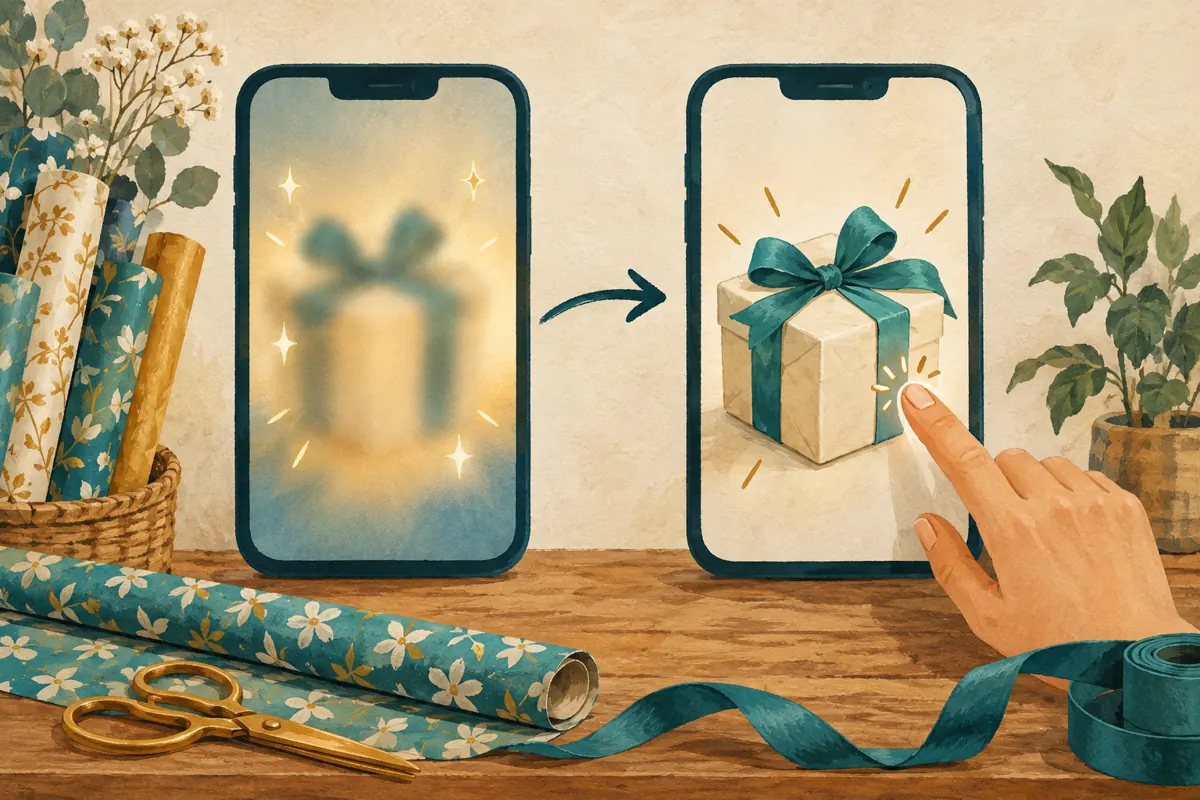
Telegram’s official Hidden Media announcement explains that photos and videos can be covered with a shimmering layer that blurs the image. Recipients reveal the content with a tap. Its documented attachment workflow is to select the media, open the attachment menu options and choose “Hide with Spoiler.”
Treat that behavior as a presentation choice. It does not establish who should receive a confidential design. If a gift recipient must not see the wrapping before collection, leave that particular photograph out of the promotional channel. A shop-created sample is a more dependable choice than asking everyone who encounters a customer’s gift to resist opening it.
3. Build a sample that is safe to reveal completely
Prepare the photograph as though every viewer will open it. Remove dedication cards, delivery labels, order receipts and personal messages from the scene before shooting. Check reflective surfaces and the edges of the worktable. A clean demonstration box lets the photograph explain the wrapping technique without borrowing a customer’s private occasion for attention.
If you want to feature an actual commission, obtain permission for the specific photograph and publication timing. Permission to photograph a finished package for collection approval does not necessarily include permission to promote it publicly. Record what the customer agreed to, then inspect the final crop against that agreement. If any detail remains uncertain, recreate the design using shop materials instead.
4. Keep the offer understandable before the tap
Write the caption before applying the effect. Explain what the hidden photograph contains, whether the post shows a demonstration sample and what the shop supplies. Distinguish wrapping a customer-provided gift from selling a filled gift box. State whether decorative accessories shown in the sample are included or require a separate quotation. Do not hide these distinctions inside the photograph.
A hypothetical caption could say: “Tap to see our folded ribbon-flower sample. This example shows our wrapping work on an empty display box. Message us with your package dimensions and preferred collection date to discuss suitable materials.” Adapt the wording to your actual offer and the language your customers use. For a Khmer-speaking audience, have a fluent colleague check that the request for dimensions is clear.
5. Test the attachment before promoting the post
Use Telegram’s documented media attachment controls to apply the spoiler, then test the prepared post in a shop-controlled review conversation. Check both the unopened appearance and the revealed photograph. Confirm that the correct sample is attached, the decorative detail remains visible at phone size and the caption makes sense without relying on the image.
If the relevant option is not visible in your installed app, pause and check the app version and available attachment controls. Do not substitute a manually blurred photograph and imply that tapping will reveal it. Ask a colleague to review the actual recipient experience on another device where practical. Treat their feedback as a usability check, not a prediction of campaign performance.
6. Choose a post sequence that supports ordering
Use the reveal where it contributes something specific. An immediately visible overview can explain the wrapping service, while a separate optional reveal demonstrates a decorative finish. Give each design an ordinary reference name, such as “folded ribbon flower,” so customers can identify it in a message. Avoid requiring them to describe which blurred rectangle they opened.
Before sharing the channel post elsewhere, verify that the shop can answer the likely next questions. For a Cambodian customer arranging collection, those may include the pickup area, when the item must arrive for wrapping and whether the customer supplies the box. Publish only confirmed arrangements. If availability varies by package size or materials, explain that the shop confirms feasibility after reviewing the request.
7. Review an SMM listing without confusing its purpose
The supplied public catalogue includes the exact title “Telegram - Views ~ 20 FUTURE POST”. Its category is “Telegram views - [Bot Account Future Posts]”, and no explanatory description was supplied. That supports identifying it as a future-post views listing in a bot-account category. It does not establish which posts qualify, how a spoiler attachment is handled or what audience will encounter the content.
Before considering that listing, obtain the current written conditions and clarify its target requirements, eligible post formats and treatment of future posts. Do not infer those details from the title alone. If your goal is receiving useful wrapping enquiries from Cambodian customers, purchased views are not evidence of that outcome. They also do not demonstrate genuine interest, sales, advertising delivery or Cambodian audience origin.
Choosing not to order is a valid decision when the service does not answer the business need. If a service is purchased, retain its order record separately from the shop’s enquiry notes. Never describe the resulting counter movement as customers opening the surprise, approving the design or requesting the service.

8. Measure the questions the reveal leaves unanswered
Telegram’s Channels FAQ says channel view counters are approximate and include views from forwarded copies. The counter therefore needs careful interpretation even without a panel purchase. It is not a record of gift bookings, and the documented counter should not be treated as a count of people who tapped the spoiler.
Keep a short enquiry log organized around useful questions: which design was mentioned, what information was missing and whether the customer supplied enough detail for a quotation. Record a confirmed job only when your normal booking requirements are met. In a hypothetical review, repeated questions about whether the box is included would justify rewriting the caption. A larger view count alone would not answer that problem.
9. Correct the mistakes that make reveals frustrating
A common mistake is covering every image, including the basic service example. Customers then face several taps before understanding the offer. Another is using vague curiosity language while omitting material choices or collection information. Replace the unnecessary mystery with a concrete description of what opening the image will show.
Do not use a spoiler to conceal damage, exclusions or an important difference between the sample and the available product. Keep decision-critical information visible in the text. Also avoid publishing a real customer’s surprise early merely because the image starts covered. If an unsuitable photograph has already been posted, stop promoting it, address the exposure with the affected customer and prepare an appropriate replacement. Do not assume a later correction reverses earlier viewing.
10. Make the next editorial decision from observed friction
After the shop has handled enquiries, decide whether the reveal deserves another use. Keep it when customers can identify the design and the format supports a pleasant optional demonstration. Simplify it when people repeatedly ask how to see the photograph or misunderstand what is being sold. These observations are more useful than assuming that extra interaction automatically means better promotion.
Assign one staff member to maintain the sample description and another to flag repeated customer questions when possible. Update the wording before preparing the next post. If you compare a revealed sample with an immediately visible one, note differences in design, timing and distribution. An informal comparison can suggest an improvement, but it cannot isolate the spoiler’s effect when several things changed together.

Frequently asked questions
Can a spoiler keep the gift hidden from its recipient?
No. Anyone who can access the message can choose to reveal the covered media. If the recipient must not see the gift yet, do not publish that photograph where they might encounter it. Use a different demonstration sample for promotion and keep the actual order image within the agreed customer communication.
Should prices or important exclusions be hidden with the photograph?
Keep essential offer information visible. Customers should understand what is supplied, what needs a quotation and what they must bring before opening the optional image. If your pricing depends on package dimensions or material choices, explain those factors clearly instead of making the reveal a condition for understanding the service.
Does the channel view count tell us how many people revealed the gift?
Do not interpret it that way. Telegram documents the channel counter as approximate post views, including forwarded copies. That explanation does not establish a spoiler-opening metric. For practical editorial feedback, review whether enquiries identify the design correctly and whether customers still need information that the post should have supplied.
Will a future-post views service work with spoiler photographs?
The supplied listing does not answer that question. Its title and category do not provide attachment eligibility or delivery conditions, so compatibility should remain unconfirmed until written terms address it. Even confirmed service delivery would not demonstrate that viewers opened the photograph, understood the wrapping offer or were potential local customers.
What should staff ask when someone enquires about the sample?
Ask for the design reference, package dimensions, whether the customer already has a box and their preferred collection date. Request only the details needed to assess the wrapping job. Confirm materials, timing and the quotation through the shop’s normal process before treating the enquiry as an accepted order.
How often should the shop use this effect?
Use it when a particular decorative reveal benefits from an optional opening step. There is no need to apply it to every promotion. Maintain enough immediately understandable examples that new visitors can assess the shop’s work quickly, and let repeated customer questions guide whether the next post needs a simpler presentation.
Explore the current service catalogue, create an account, or ask a specific question through support tickets.
- Telegram: Hidden Media, Zero Storage Usage, New Drawing Tools, Profile Pictures for Your Contacts, and More
- Telegram Channels FAQ
Prepared with AI assistance. Illustrations explain the workflow and do not represent customer results.