19/10/2026 17:41
Closed for a Workshop Move? Telegram Away Messages for Cambodian Furniture Restorers
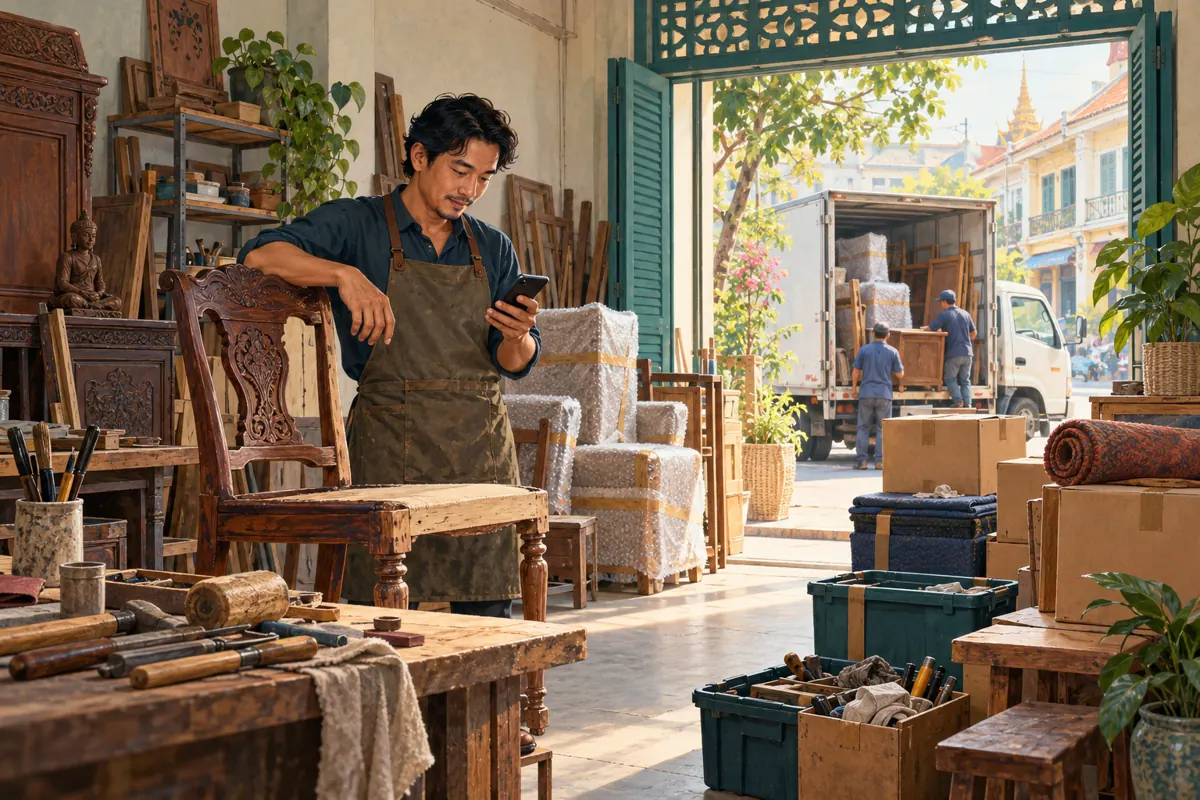
A furniture restoration video can keep attracting questions while the workshop that made it is packing tools into boxes. Someone wants a quotation, another customer asks where to collect a chair, and a third assumes that an immediate automated reply means someone has reviewed their photographs. For Cambodian businesses moving premises, this creates a specific communication problem: promotion continues while the ability to respond changes. A Telegram away message can explain that interruption, provided its timing, audience and wording match reality. This workflow connects a temporary closure announcement with testing, human follow-up and a sensible decision about further promotion.
1. Define what stops during the move
Start with an operational decision before opening Telegram settings. List which activities will pause: replying to new enquiries, assessing furniture photographs, receiving deliveries, accepting walk-ins or arranging collections. These activities may restart at different times. A workshop can resume answering messages before its new entrance is ready for customers, so one broad statement that the business is open again may create confusion.
Consider a hypothetical Phnom Penh furniture restorer moving equipment between two premises. The owner can read messages occasionally but cannot assess new jobs until the workbench is assembled. Existing collections need individual arrangements. The away message should therefore explain the delay in assessments and tell customers to wait for confirmation before travelling. It should not suggest that every service has stopped or that every existing appointment has been cancelled. Assign one person responsibility for keeping these distinctions accurate throughout the move.
2. Choose an away message for a temporary interruption
Telegram describes away messages as automated responses for periods when a business is closed or unavailable. Its business tools also distinguish them from greeting messages, which welcome people contacting the account. For this scenario, the away message carries the temporary interruption; a greeting can continue to explain the workshop’s ordinary services. Telegram’s official introduction identifies Settings > Telegram Business as the place to find these tools. Check access in the account before planning around them.
Keep the division simple. The ordinary introduction might explain which furniture the workshop restores. The temporary reply should explain why assessments are delayed and when staff expect to resume them. Read both messages together if both features are enabled. A warm welcome promising prompt advice can undermine an away message announcing several days without assessments. If the feature is unavailable in the account, use a clear public closure notice and manual replies when possible, without describing them as automatic.
3. Write a message that acknowledges without accepting
Build the reply around four useful details: the interruption, the next expected review window, the information customers can prepare and the action that still needs human confirmation. Use actual dates instead of only tomorrow or next week. State Cambodia time when timing matters to customers elsewhere. Avoid promising an exact response deadline unless someone has accepted responsibility for meeting it.
A hypothetical English draft is: “Automatic reply: we are moving our furniture workshop from 12–14 November. We expect to begin reviewing enquiries on 15 November, Cambodia time. For a new assessment, please send one full photo, one close-up of the problem and your general area. Please wait for our confirmation before bringing furniture. This reply does not confirm a quotation or collection.” Replace every date and detail before use. Prepare Khmer wording for customers who use Khmer and have a fluent colleague check the meaning. Keep any additional language version equally clear about what remains unconfirmed.
4. Match the schedule to the interruption
Telegram’s official technical documentation lists away-message schedules for continuous use, periods outside working hours and a custom interval. For a defined workshop move, a custom interval is a useful starting point. Routine opening hours describe a repeating pattern; the move is a separate event. Review the available controls in the installed app and record the intended start and end in the team’s own notes.
Set the start when the reply team becomes unavailable, which may be earlier than the physical closure. Set the end according to the expected return of message handling, rather than the arrival of the moving truck. If the reopening remains uncertain, write an honest review date and arrange a manual check before the message expires. An expired notice does not mean the team is ready. Conversely, leaving a closure reply active after staff return can discourage customers who are ready to discuss a job.
5. Decide which conversations should receive it
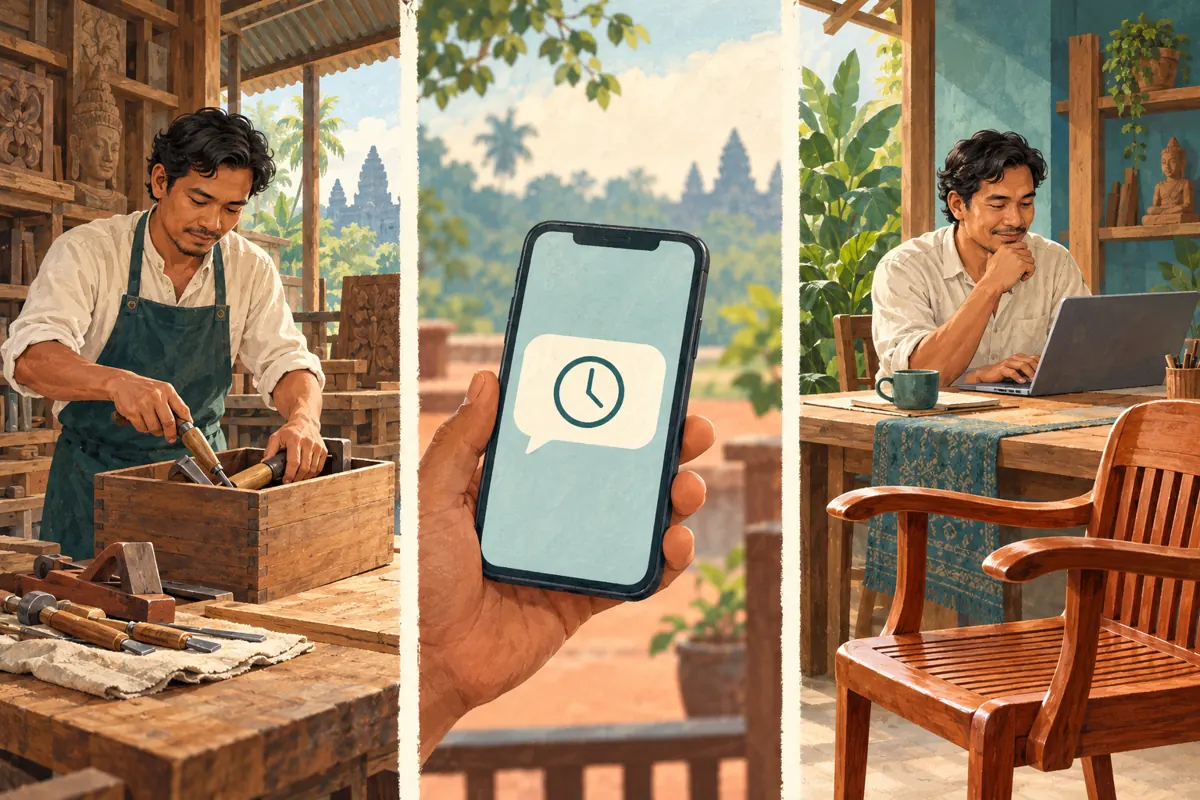
Telegram supports recipient selection and exclusions for automated business messages. This matters when the same account contains customers, suppliers, relatives and employees. A colleague coordinating the move does not need the customer closure response. An existing customer asking about their furniture may need it just as much as a person making a first enquiry.
Review recipient choices against actual relationships rather than assuming saved contacts are personal and unsaved contacts are customers. Many workshops save repeat customers’ numbers. Excluding all contacts could therefore remove precisely the people with collection questions. Write down the intended audience in ordinary language before configuring it: new enquiries and existing customers should receive the notice; the internal moving team should not. Where possible, use specific exclusions for known internal conversations. Keep separate personal arrangements for customers with confirmed collections, because a general automated message cannot explain the circumstances of each job.
6. Test timing, recipients and online behaviour
Ask a consenting colleague to help test from a separate account before promoting the closure notice. Check an included conversation and an excluded one. Record the settings, test time and observed result. During a controlled test interval, verify that the included account receives the intended message. Then restore the real closure interval and check its dates carefully. Do not leave a temporary test schedule active.
One detail can explain an apparently failed test: Telegram documents an offline-only option that suppresses away messages when the business account has been online within the previous ten minutes. If that option is enabled, testing immediately after adjusting settings may give a misleading result. Check whether this behaviour suits a workshop owner who opens Telegram to coordinate movers but cannot answer customers. Treat a missing reply as a reason to inspect conditions, recipient selection and timing. Repeatedly rewriting the message will not fix a schedule or eligibility mismatch.
7. Make the public promotion agree with the reply
Review the posts that currently send people to the workshop’s Telegram account. A restoration demonstration can remain useful during the move, but its invitation should match available service. Replace an immediate walk-in invitation with instructions to send an enquiry and await confirmation where appropriate. If the new location is not ready for visitors, do not present it as an active drop-off point.
Use a temporary public update to explain the move to people who have not messaged yet. The update and the away message serve different moments: one helps visitors decide what to do, while the other sets expectations inside a conversation. Check any older promotion that a partner is still sharing, and provide corrected information when needed. Do not assume changing the automatic reply updates captions, printed materials or someone else’s post. Keep the explanation brief enough that the operational detail remains visible.

8. Make the SMM-panel decision about the actual problem
A panel purchase cannot restore the workshop’s ability to assess furniture or answer messages. The supplied KhmerBoosting catalogue includes “Telegram Members ~ Max 1M ~ 50k/days ~ Instant ~ 𝐍𝐎 𝗥𝗘𝗙𝗜𝗟𝗟”. Its title identifies a member-related listing, but the supplied description is empty. The title alone does not establish delivery behaviour, audience location or suitability for this closure workflow. It provides no basis for claiming that the service configures business replies.
Purchased engagement is not evidence of genuine interest, Cambodian users, sales or advertising delivery. If the immediate problem is unanswered enquiries, direct effort toward communication and staffing. Defer a new panel order when the team cannot manage additional attention or explain what the proposed service would accomplish. If an order already exists, preserve its reference and ask support about its documented conditions when necessary; do not assume that changing a Telegram setting pauses it. Review applicable platform rules separately before any purchase.
9. Prepare the return to human replies
Before the closure begins, decide how the returning team will review conversations. Deal with existing commitments and time-sensitive collection questions, then work through new assessments using a consistent method. Record the next action for each genuine enquiry: request a clearer photograph, clarify the furniture material, arrange an inspection or explain that the job is outside the workshop’s scope.
In the hypothetical workshop, a customer sends a chair photograph during the move and receives the away reply. When staff return, the first personal response should address that chair and identify what is still needed. It should not treat the automated acknowledgement as an accepted job. If the move runs late, update the public notice and reply settings, then contact people whose confirmed arrangements are affected. A general announcement cannot replace a direct conversation about an existing commitment.
10. Review confusion before restarting promotion
Common mistakes include leaving obsolete dates in the reply, excluding repeat customers, asking for information already supplied and confusing an automatic response with a reviewed enquiry. Another is promising that every message will receive an answer immediately upon reopening, even though staff must unpack equipment and inspect existing work. Correct these practical failures before increasing promotional activity.
After reopening, review the questions people actually asked. Did anyone travel without confirmation? Did customers understand which photographs to send? Did staff need to explain the same delay repeatedly? These observations can improve the next closure message, but they do not prove that automation caused a sale or retained a customer. Keep genuine enquiries and confirmed work separate from panel records. Restart promotion when the service promise is current, the reply team is available and the workshop can handle the next step it invites people to take.
Frequently asked questions
Will an away message reserve a restoration slot?
No. In this workflow it acknowledges an interruption and explains what happens next. Staff must assess the furniture and explicitly confirm any arrangement. Avoid language such as booking accepted unless the business has actually completed that step.
Why did the test account receive no automatic reply?
Check whether the account was included, whether the schedule was active and whether offline-only behaviour applied. Telegram documents suppression under that option when the business account was online within the previous ten minutes. Record the conditions before testing again.
Should existing customers receive the closure message?
Usually they need to know about the interruption, especially if collections or assessments are affected. However, customers with confirmed arrangements also need specific instructions. Review exclusions carefully so saved customer contacts do not accidentally miss the general notice.
Can the workshop keep sharing restoration videos while closed?
Yes, if the invitation accurately reflects what customers can do. Explain the delay and ask people to await confirmation before visiting. If nobody can handle the resulting conversations, reduce promotional activity until the team can support the next step.
Does the workshop need an SMM-panel service for this setup?
No panel service is required for the workflow described here. Configure the available Telegram Business controls in the account itself. The supplied member listing does not document away-message setup, customer support staffing or guaranteed local enquiries.
Explore the current service catalogue, create an account, or ask a specific question through support tickets.
- Telegram — Introducing Telegram Business
- Telegram Business documentation — Away messages and schedules
- Telegram — Business message recipient selection
- Telegram — Away-message configuration and offline-only behaviour
Prepared with AI assistance. Illustrations explain the workflow and do not represent customer results.