22/10/2026 14:50
Which Chair-Care Demo Comes Next? YouTube Polls for Cambodian Cane-Chair Repair Shops
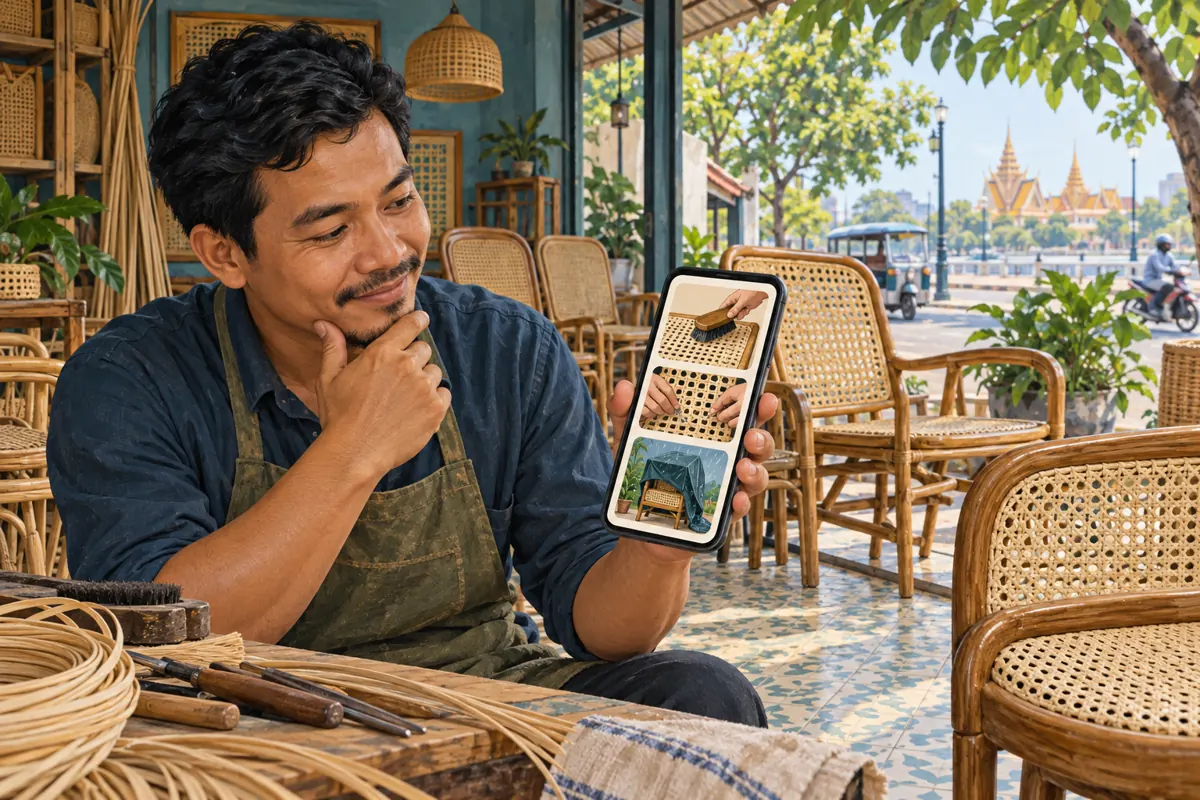
A cane-chair repair shop can film many useful demonstrations, but choosing the next one takes time. Should the owner explain dust removal, show how to photograph loose weaving, or discuss where to place a chair during rainy weather? A YouTube poll can help participating viewers express a preference before the shop prepares its tools and camera. The useful outcome is a clearer editorial choice, not a claim that everyone who votes needs a repair. For Cambodian businesses considering social media promotion through an SMM panel, that distinction matters: purchased engagement cannot establish genuine interest, sales, ad delivery or Cambodian users. This workflow shows how to ask a focused question, review the response and produce a practical follow-up.
1. Define the decision before asking for votes
Start with a decision the shop can actually make. In a hypothetical Phnom Penh workshop, the owner has time to film one chair-care demonstration during the next quiet afternoon. The poll will help choose its subject. It will not determine repair prices, promise collection availability or reserve appointments. Write that purpose in the planning note before drafting the public question.
Choose topics that fit the same production opportunity. A short explanation of brushing dust from a seat is not comparable with a complete restoration documentary requiring several days. If one option needs unavailable materials or another customer's permission, remove it before asking. Every offered choice should be something the workshop can responsibly explain and realistically deliver.
2. Check that the channel can use Posts
YouTube's official guidance says Posts are unavailable for supervised accounts and channels set as Made for Kids, and access can depend on the channel role. Check the actual channel before preparing a campaign around the feature. If the control is missing, review eligibility and access rather than assuming more subscribers or a panel purchase will unlock it.
Posts can appear on the channel and may appear in viewers' Home or Subscriptions feeds. That possibility does not mean every subscriber will see the question. Plan around the responses actually received. If posting is unavailable, use an ordinary invitation for genuine topic suggestions in an appropriate existing communication channel, recording that feedback separately from any YouTube poll.
3. Ask one question with comparable answers
For the hypothetical workshop, a workable question is: Which cane-chair care topic would you like us to demonstrate next? Possible answers are Dust removal, Photographing loose weaving, and Choosing a sheltered position. Each answer describes a learning topic. None implies that choosing it means the viewer owns a damaged chair or agrees to buy a service.
Avoid mixing preferences with transactions. Answers such as Cleaning, Book a repair and Cheapest chair ask respondents to make different kinds of choices. Also avoid leading language such as Our best repair service versus Basic cleaning. Keep the choices similar in length and specificity so the wording does not make one sound more useful before viewers consider it.
Use the language your intended viewers can comfortably read. A shop serving Khmer-speaking households should prepare natural Khmer wording and have a fluent colleague check the distinction between maintenance and repair. If English is also needed, test whether bilingual choices remain legible. Do not squeeze technical explanations into each option; simplify the question first.
4. Choose text or images for a reason
On desktop, YouTube's documented route is Create, Create post, then Poll. Choose a text or image poll. Text polls allow up to four answers, with 65 characters per answer; image polls allow up to four images, with captions limited to 36 characters. Review the completed composer before selecting Post.
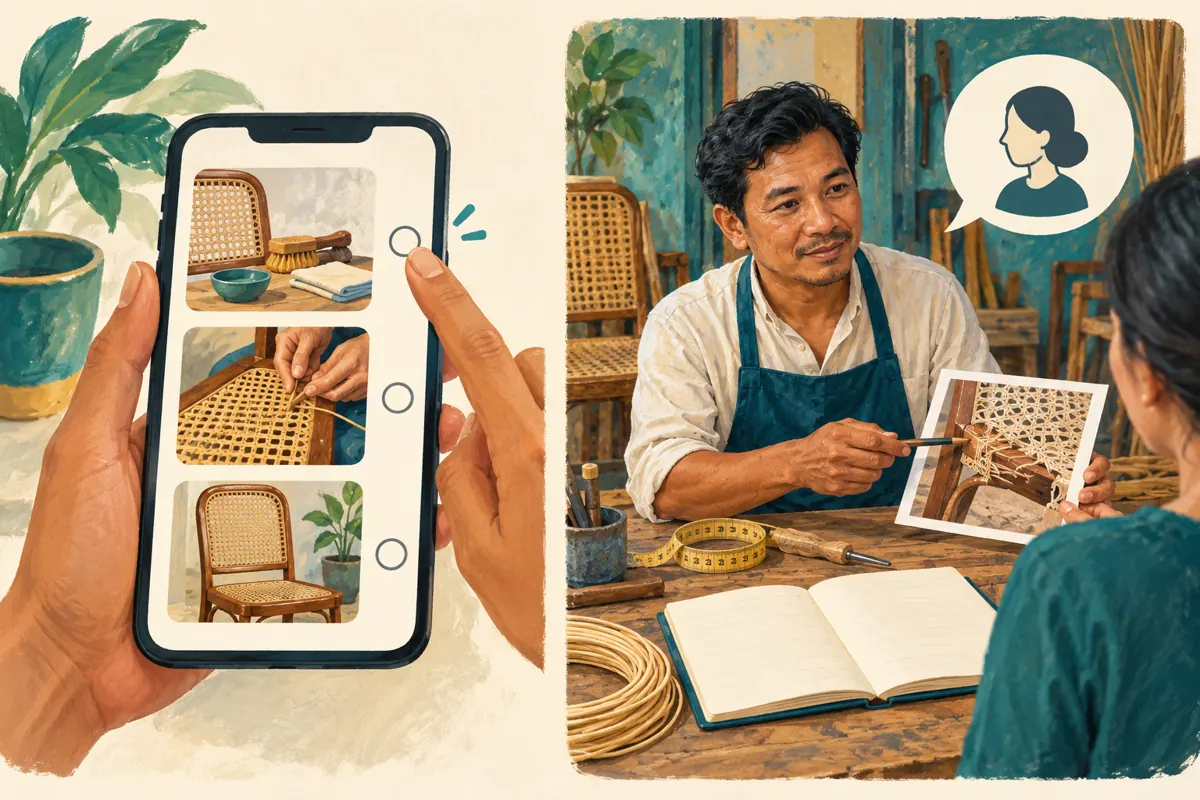
Use text when the difference is conceptual, such as selecting a filming topic. Use images when viewers need to recognise a physical detail. For example, a loose strand and an intact weave can be difficult to distinguish from unfamiliar terminology alone. Prepare close-ups with matching framing, lighting and background so photographic quality does not become the hidden question.
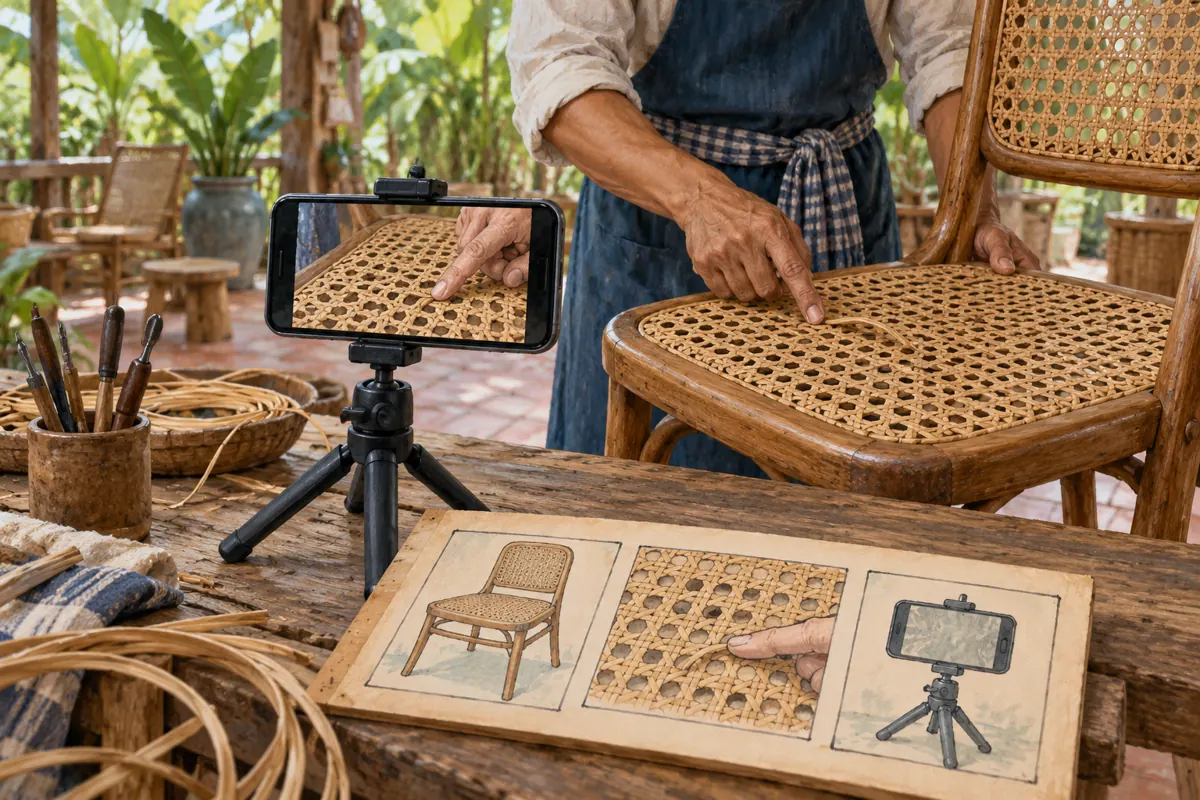
The illustrations accompanying this article explain the workflow; they are not evidence of a repair or actual poll results. For a shop's own poll about identifiable damage, original photographs of its demonstration chair will usually communicate the specific condition more accurately. Remove customer paperwork from the scene and obtain permission before showing someone else's furniture.

5. Set a review time and a tie rule
Decide when the team will use the response to plan filming. In this hypothetical example, the owner reviews the poll on Friday afternoon, Cambodia time, before preparing Saturday's demonstration. Tell viewers that responses reviewed then will inform the next video. This is an editorial review deadline; do not describe it as automatic poll closure unless you have verified and configured that behaviour.
Agree on a tie rule before seeing the result. The workshop could choose whichever tied topic answers a recurring counter question and can be demonstrated clearly with available materials. If participation is too limited to guide the choice, use the same practical criteria. Recording that rule helps prevent the team from presenting a personal preference as an audience mandate.
Assign one person to record the question, options, post reference and review time. Another colleague should be able to understand what was asked without relying on memory. A simple dated note is sufficient; the task does not require a complicated reporting system.
6. Invite participation without steering the answer
Introduce the question as a request for help choosing useful educational content. Explain that the workshop will prepare one demonstration and that participation is optional. Avoid offering repair priority, discounts or other benefits for selecting a particular answer. Such incentives make it harder to interpret whether the response reflects interest in the topic.
If you share the poll through an existing shop channel, give the same neutral explanation each time. Do not ask one group to support cleaning and another to support repair inspection. Keep a note of where you shared it: a question circulated among furniture enthusiasts may attract different interests from one shown to customers already discussing damaged seats.
Do not ask voters to post addresses, telephone numbers or collection instructions publicly. Someone who needs a quote should use the shop's established enquiry route. A public content-planning question should remain easy to answer without exposing personal information.
7. Read preferences without inventing demand
At the review time, record the response as displayed and read any relevant explanations. A vote for photographing loose weaving might mean the person wants to describe damage accurately, enjoys craft videos or is helping a relative. The poll alone cannot distinguish those motives. Report the selected topic as a preference among participating viewers.
Watch for a wording problem before treating the leading answer as decisive. If comments show that viewers interpreted sheltered position as a storage-service offer, the responses do not answer your intended question. Clarify the topic and consider asking a revised question later. Keep the earlier version in the planning record so the two exercises are not combined.
Avoid turning the result into a national claim. A shop channel's voluntary poll is not a representative survey of Cambodian households. It also does not prove where respondents live. The decision can still be useful at its proper scale: it gives this workshop a reason to make one particular explanation next.
8. Apply a separate policy check to SMM services
A relevant public catalogue example is YouTube Like ~ Max 5k ~ 5k/days ~ Instant ~ 𝗥𝗘𝗙𝗜𝗟𝗟 30D. Its title identifies a like-related listing, but the supplied brief contains no supporting description. Do not infer poll support, audience location, delivery methods or verified performance from that name. Its numerical and refill wording should not be treated as independently confirmed promises.
YouTube's fake engagement policy prohibits artificial increases in views, likes, comments and other metrics. It also warns that a hired promoter's actions can affect the channel. A listing's availability in an SMM panel does not establish policy compliance. If a proposed method artificially inflates engagement, do not use it for this workflow.
Even a recorded service delivery cannot answer which chair-care lesson local viewers want. Never present purchased likes or generated comments as customer requests, and do not promote artificial engagement services in the poll or follow-up video. Put effort into a clear question, relevant distribution and a demonstration that fulfils its promise.
9. Turn the chosen topic into a concrete demonstration
Suppose, hypothetically, the workshop chooses photographing loose weaving after reviewing the poll. Build the video around a useful task: helping someone show the location and extent of visible damage when requesting an assessment. Plan a whole-chair view, a closer view of the affected area and an example showing why a poorly lit photograph leaves questions unanswered.
Have the craftsperson check every instruction before filming. Keep the explanation within what the shop can assess from images, and explain when an in-person inspection is needed. Do not turn a visual example into a promise that all similar-looking damage has the same repair cost or solution. The poll selected a topic; it did not validate technical advice.
Publish a short follow-up explaining what the shop decided and where to find the demonstration. If practical constraints changed the plan, say so plainly. Viewers should see that their participation informed a real editorial decision, even when the team needed to adapt the filming schedule or narrow the topic.
10. Review the lesson and the business response separately
After publication, look for evidence that the explanation helped. Did subsequent enquiries include clearer chair photographs? Did viewers still confuse loose weaving with a frame problem? Record specific observations without claiming that the poll caused every change. When possible, ask enquirers which guide they used instead of guessing from timing.
Keep three records distinct: the poll's topic preference, feedback about the demonstration and actual repair enquiries. An enquiry becomes a booking only through the shop's normal confirmation process. Neither a vote nor a video interaction reserves workshop capacity. This separation makes promotion easier to evaluate and prevents a busy-looking channel from becoming a misleading sales report.
Use unresolved questions to improve the next demonstration. If people understand how to photograph the seat but omit the chair frame, add a clearer full-chair example. That is a specific content improvement the team can make, regardless of whether the public engagement totals look impressive.
Frequently asked questions
What should we do if almost nobody answers?
Check whether the question was understandable and shared with people likely to care about the topic. Do not manufacture participation. Choose a feasible demonstration using recurring shop questions, and describe that basis honestly. A quiet poll can still reveal that the wording, distribution or subject needs improvement.
Should we use a quiz instead of a poll?
Use a poll for preferences. YouTube quizzes require a correct answer, which makes them suitable for checking knowledge rather than deciding what viewers want to watch. A question about which demonstration comes next has no objectively correct choice. Avoid making respondents feel their learning needs are wrong.
Can votes help forecast how many repairs we will receive?
They cannot provide a reliable booking forecast by themselves. Someone may want a maintenance lesson without owning a chair that needs repair. Use actual enquiries, assessments and confirmed appointments to plan workload. Keep the poll useful for content selection rather than converting its response into an unsupported sales estimate.
Can we include a repair offer in the follow-up?
Yes, provided it accurately describes the shop's current service and uses a separate enquiry route. Explain what information is needed for an assessment and what remains subject to inspection. Do not imply that poll participation created a reservation, approved a price or established that the viewer needs the repair.
Explore the current service catalogue, create an account, or ask a specific question through support tickets.
Prepared with AI assistance. Illustrations explain the workflow and do not represent customer results.