20/10/2026 06:05
Who Takes the Order? Instagram Collab Posts for Cambodian Florists and Vase Makers

A flower arrangement photographed in a handmade vase can introduce two Cambodian businesses at once. It can also leave shoppers wondering whether the vase is included, which shop takes payment and where to collect the finished gift. An Instagram Collab needs an operating plan behind the attractive picture. This guide follows a hypothetical Phnom Penh florist and ceramic workshop preparing a shared gift offer. It explains how to agree on the product, review the collaboration, direct enquiries and evaluate the result. For businesses comparing SMM-panel services, it also identifies why buying a visible metric cannot resolve an unclear offer or establish genuine demand.
1. Decide whether shared authorship fits the offer
Meta describes Instagram Collabs as a way to co-author a feed post, carousel or Reel. After an invited collaborator accepts, the content can appear on each account’s profile grid and be distributed to their audiences. That makes the feature relevant when both shops contribute to the same product story. It does not guarantee that every follower sees the post, that the audiences are Cambodian or that viewers become customers.
Start with a practical question: would both businesses willingly answer for everything shown and promised? In the hypothetical partnership, the workshop supplies the vase and the florist supplies the arrangement. Both can approve a shared presentation. If the florist merely borrowed a display vase that is unavailable for purchase, a clearly explained credit may be more appropriate. Use shared authorship when responsibility and participation are real, rather than inviting an unrelated account simply because it has a larger following.
2. Define the bundle before choosing the photograph
Write a short offer sheet that names the vase, arrangement, packaging and any optional extras. Specify whether customers buy a complete gift or order the pieces separately. Include the confirmed price and currency, collection location, preparation time and substitution policy. These are decisions for the actual businesses; a caption writer should never fill gaps with plausible assumptions.
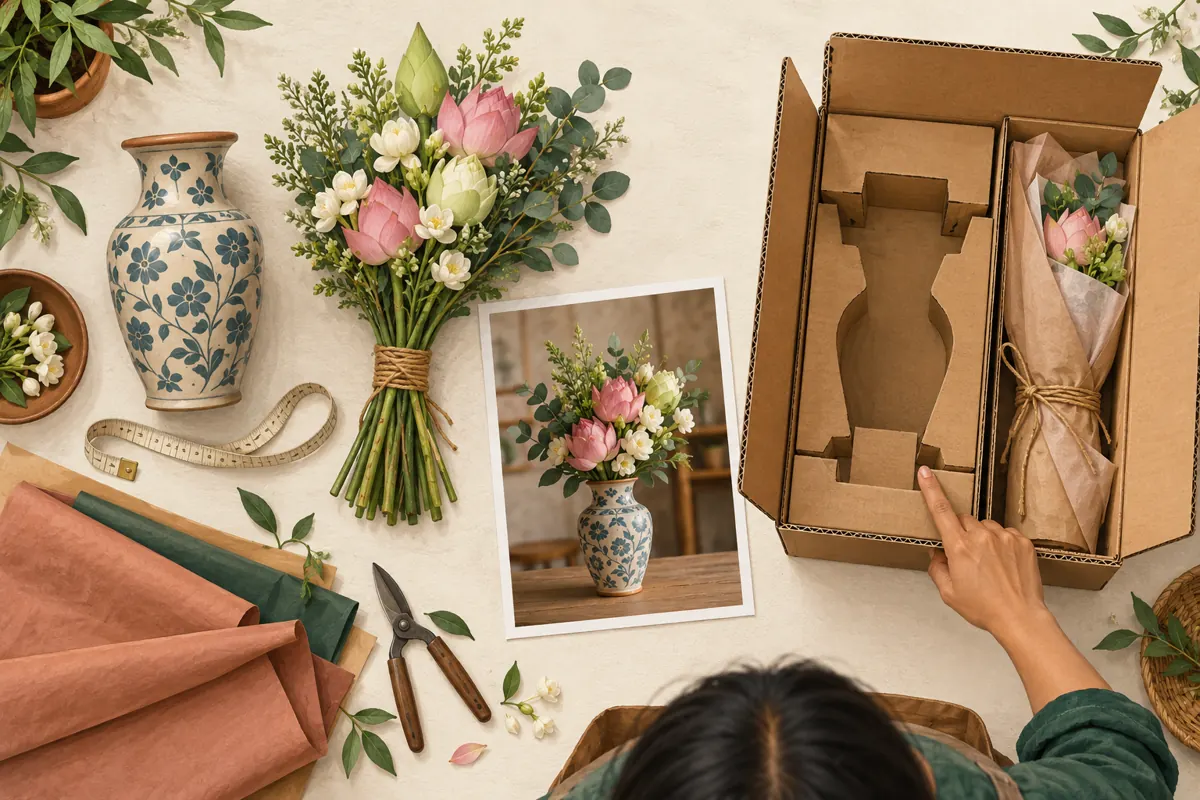
For the hypothetical offer, imagine a small glazed vase paired with a seasonal arrangement. The partners agree that wrapping is included, while delivery requires a separate quote. They also agree that a different flower colour needs customer approval. Photograph the version customers can actually request. If the sample contains decorative props, identify those exclusions plainly. A beautiful table scene becomes confusing when viewers cannot distinguish the sale item from the photographer’s styling.
3. Assign one publishing owner and one enquiry lead
Choose which business will prepare and publish the original post, and which person will coordinate corrections. Separately, choose the main account for bundle enquiries. Those roles need not belong to the same shop. The workshop might produce the strongest photographs while the florist handles collection times and flower availability. Record the responsibilities in a shared note that both owners can understand.
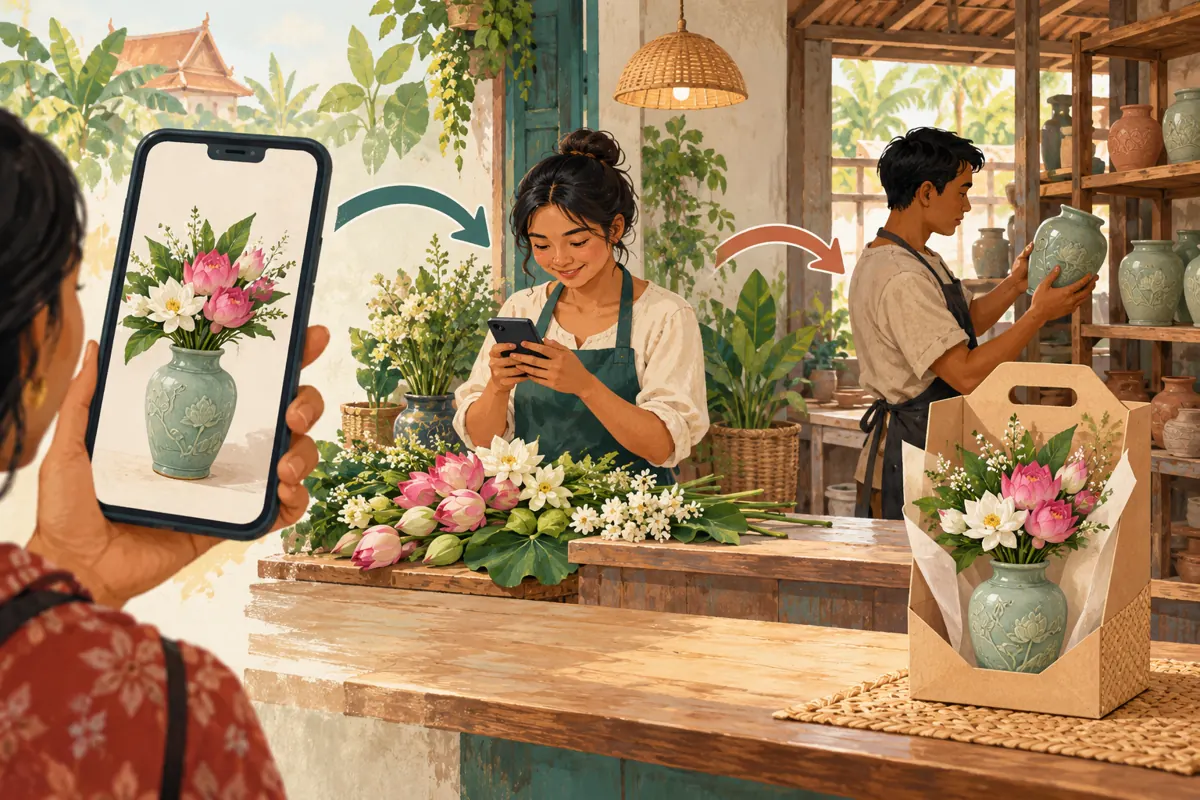
Agree on a simple internal handoff: the enquiry lead checks the requested vase with the workshop before confirming the complete order. Establish who answers questions about damaged ceramics, flower substitutions and missed collection. Customers should not have to negotiate between two businesses to discover who can help. Keep each account under its own authorised staff; approving a collaboration should not become an informal exchange of passwords or a reason to give a partner unrestricted account access.
4. Build a post that explains what the customer receives
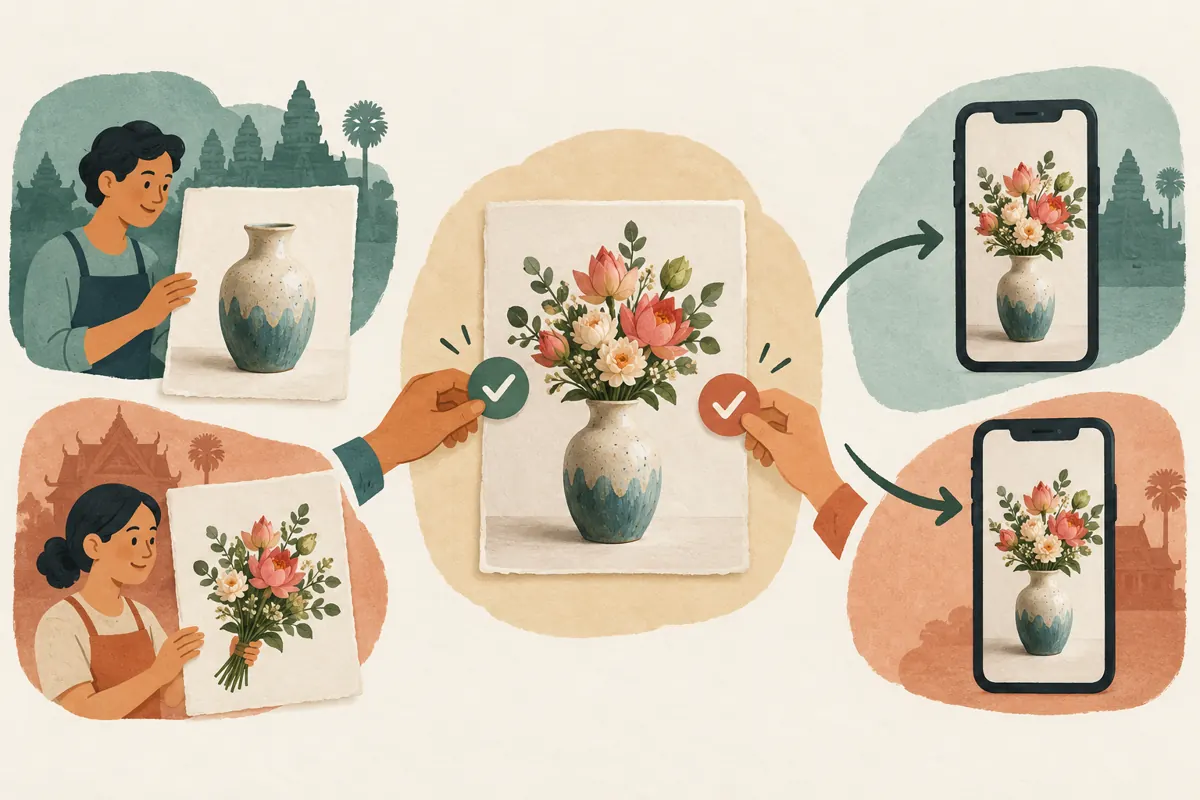
For this scenario, a short carousel is a useful editorial choice. Begin with the complete arrangement, then show the vase separately, the approximate physical scale and the packed collection version. Use photographs of the actual sample for the sales post. The illustrations accompanying this guide explain the workflow; they are not product photographs or proof of a real partnership.
Write the caption in the language the intended customers understand, with Khmer copy reviewed by someone who can check the commercial meaning. Add English only when it serves the audience. Put bundle contents and the enquiry account before secondary background about the makers. A hypothetical closing instruction could be: send the preferred collection date and vase colour to the florist’s account for an availability check. Avoid asking customers to post their phone number or delivery address in public comments.
5. Review the invitation and acceptance as a separate step
Both partners should approve the final images and caption before publication. Check the exact account handle together, especially when a shop has an old account or similarly named profiles. Use the collaboration option available in the current Instagram publishing flow, and have the invited shop review and accept the invitation from its own account. Menu wording can vary, so verify the result rather than relying on a remembered sequence of taps.
Sending an invitation is not the same as confirming shared authorship. After acceptance, inspect the live post and each intended profile. Confirm that the correct businesses appear and that the published caption matches the approved offer. If the collaboration option is unavailable or the invitation remains unresolved, pause the joint launch. The partners can instead agree on separately authored posts with accurate credits and consistent ordering instructions, without describing them as an accepted Collab.
6. Walk through a shopper’s enquiry before promoting
Ask a colleague who did not write the caption to read the post and explain how they would order. They should be able to identify what is included, who to contact and what information to send. If they assume the arrangement is available immediately or that both shops accept payment, revise the wording before drawing more attention to it.
In the hypothetical test, the colleague messages the ceramic workshop because that is where they discovered the post. The workshop should have an agreed response directing bundle enquiries to the florist, while still answering ceramic-specific questions. Do not simply bounce the person between accounts. If a handoff needs customer details, explain the purpose and obtain permission before passing them on. Confirm availability, the final amount and the collection arrangement before treating an enquiry as an accepted order.
7. Evaluate SMM-panel listings against the actual task
The supplied KhmerBoosting catalogue includes the exact public title “Instagram Likes ~ 100% Real Accounts ~ Max 1M ~ 10k-50k/Days ~ Instant ~ 𝐍𝐎 𝗥𝗘𝗙𝗜𝗟𝗟”. Its title identifies an Instagram likes listing, but the supplied description is empty. The wording is a catalogue claim, not independent verification of account authenticity, speed, audience location or suitability for this shared post.
Instagram’s published guidance warns against artificially collecting likes, followers or shares. Meta has also described enforcement against fake-engagement sellers. For this partnership, do not purchase artificial likes to make the bundle appear established. Purchased engagement is not evidence of genuine interest, sales, ad delivery or Cambodian users. A panel listing also provides no basis for assuming it creates a Collab or obtains the partner’s acceptance. Reviewing a service can reasonably end with a decision not to order it.
8. Keep promotion decisions joint and specific
Before either shop spends money, agree on the intended action: an availability enquiry, a visit to the workshop or a confirmed collection order. These goals require different explanations. A post intended to attract enquiries needs a clear contact route; a workshop visit needs accurate location and opening information. Set a spending limit only after the offer and response process are ready.
Do not let one partner quietly buy engagement and then present the resulting count as evidence that the other partner’s customers love the product. Keep any existing service records separate from customer enquiries and sales records. If the shops later consider platform advertising, evaluate the available advertising workflow and permissions independently. The existence of a Collab does not, by itself, establish advertising eligibility or authorise spending on behalf of the other business.
9. Plan for substitutions and stock changes
A shared offer can become inaccurate when either component changes. The ceramic workshop may run out of the photographed glaze while the florist still has flowers. Conversely, the vase may remain available when the featured flowers cannot be sourced. Agree that either partner can flag a material change immediately and ask the publishing owner to review the public wording.
Distinguish a minor appearance variation from a different offer. A replacement vase shape may change capacity, packaging and the overall presentation. Do not rely on a buried comment to correct a misleading main image. Review the caption, accompanying content and responses already being sent to customers. For an existing enquiry, explain the proposed substitution directly and obtain agreement before confirming. Pause further promotion when the published promise can no longer be fulfilled.
10. Review the partnership through customer decisions
Choose a review date together and compare the questions received with the information supplied. Record whether enquiries concern the complete bundle, flowers alone or the vase alone. Note recurring uncertainties, such as delivery coverage or whether a gift card is included. Keep confirmed orders separate from unanswered messages, provisional availability checks and compliments. A friendly comment is useful feedback, but it is not a reservation.
Avoid claiming the Collab caused every order placed during the campaign. Customers may already know either shop or have discovered the offer elsewhere. Ask how they found it when appropriate, while allowing an unknown answer. In a hypothetical review, repeated questions about whether the vase is included would justify improving the opening caption. The next decision should follow the evidence: clarify the offer, adjust the handoff, change the product combination or stop an impractical partnership.
Frequently asked questions
Is tagging the other shop enough to create a Collab?
Do not treat a tag as proof of shared authorship. Meta describes Collabs as an invitation-and-acceptance feature. Verify that the intended partner accepted and that the live content displays the collaboration. A normal credit can still be useful, but describe it accurately and agree on how each shop will direct enquiries.
Which business should receive payment for the bundle?
The partners must decide this before publishing. Choose a process that matches who confirms stock, issues the customer’s order record and resolves problems. Explain the payment recipient clearly during confirmation. Shared authorship on Instagram does not establish the commercial arrangement between the shops or settle how they divide revenue.
Should the smaller shop buy likes before inviting its partner?
No. Artificial engagement conflicts with Instagram’s published guidance and does not establish that the smaller shop has interested local buyers. A useful partnership proposal is a clear product sample, realistic preparation plan and dependable enquiry process. A larger visible count cannot substitute for those practical commitments.
What if customers message both businesses about the same gift?
Have staff confirm which account is handling the enquiry before reserving duplicate stock. Use a simple internal reference without copying unnecessary personal information. Tell the customer who will send the final confirmation. The purpose is to maintain one coherent order conversation while allowing each specialist to answer relevant product questions.
Can the same workflow work outside Phnom Penh?
Yes. Adapt the fulfilment details to the actual shops and customers. If the partners operate in different Cambodian towns, confirm how components reach the assembly point, who checks condition and which collection or delivery promises are realistic. The collaboration should make a workable offer easier to understand, rather than conceal logistical uncertainty.
Explore the current service catalogue, create an account, or ask a specific question through support tickets.
- Meta: New Ways to Create With Music and Collaborate With Friends on Instagram
- Instagram Community Guidelines
- Meta: Preventing Inauthentic Behavior on Instagram
Prepared with AI assistance. Illustrations explain the workflow and do not represent customer results.