21/10/2026 09:42
Music Claim on the Wind-Chime Demo? YouTube Audio Repair for Cambodian Shops

A wind-chime video sells partly through sound. Customers need to hear the difference between bamboo knocks and metal ringing, not simply watch an attractive object move. If background music receives a YouTube copyright claim, removing it can create another editorial problem: does the remaining recording still explain the product honestly? For Cambodian shops sharing demonstrations through social posts and customer messages, that question belongs before further promotion. This guide follows a hypothetical Phnom Penh wind-chime shop from a claim notice to a reviewed demonstration, with a separate decision about SMM-panel services. The examples are illustrative, not reports of customer results.
1. Define what the demonstration must preserve
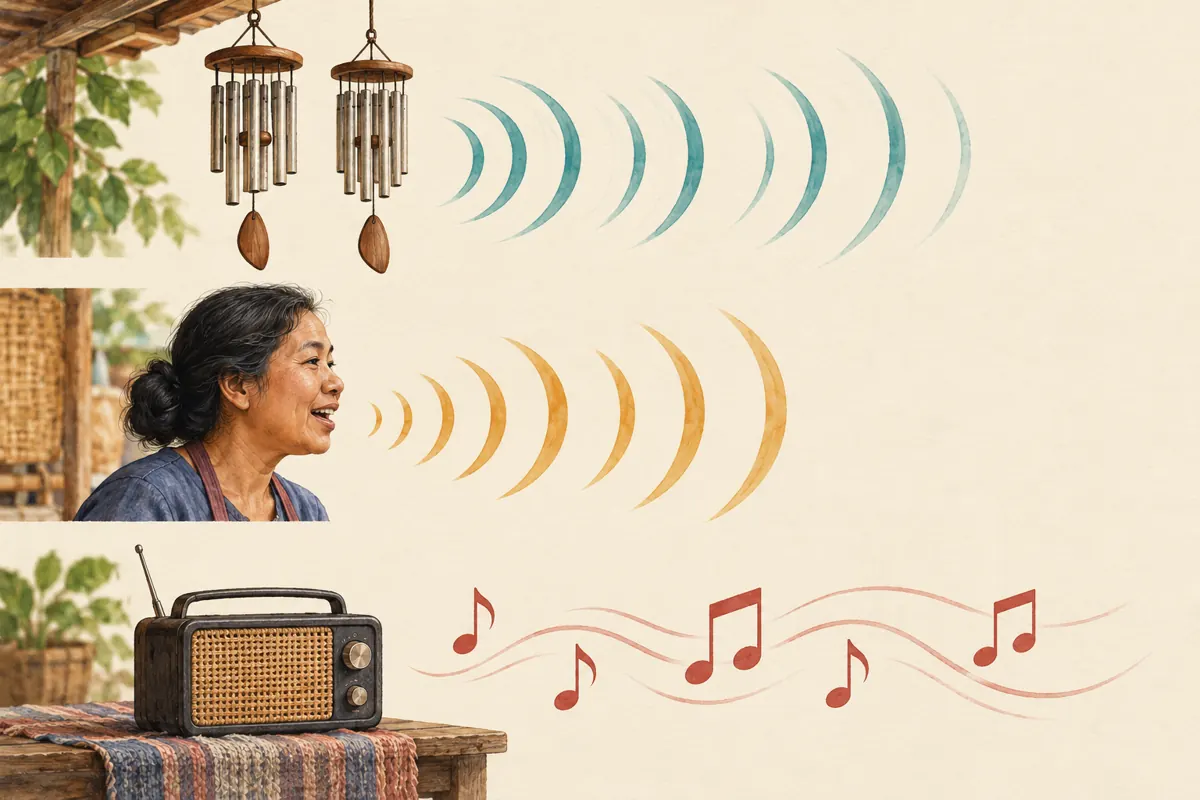
In this hypothetical example, a shop records two wind chimes while a radio plays behind the counter. The presenter speaks Khmer, identifies each model and moves its wind catcher by hand. The published video promises that buyers can compare the sounds. Later, a music claim appears. The immediate business task is to preserve an understandable comparison, rather than make the notice disappear at any cost.
Write a short acceptance note before choosing an edit: the model must remain identifiable, the strike and fading sound must remain audible, and the spoken explanation must match the object shown. Include the recording conditions that matter. A hand-moved demonstration should not be described as proof of how often the chime will ring in natural wind. This note gives the owner and editor a shared definition of a usable result.
2. Read the actual claim before changing the promotion
YouTube explains that Content ID claims can affect monetization or where a video is viewable. On desktop, open YouTube Studio, select Content, find the video, open the claim notice and View details, then inspect the relevant claim. Available editing actions can include trimming, replacing a song or erasing it. These options are documented in YouTube Help: https://support.google.com/youtube/answer/2902117?hl=en.
For the shop's working note, record the video address, affected passage and restriction shown. Avoid converting a specific notice into a broad conclusion such as 'the channel is banned' or 'customers cannot watch anything.' Check the actual destination before preparing more shares. Assign one person to coordinate the review so that a colleague does not promote the old sound comparison while another person is deciding whether it remains useful.
If the shop believes the claim is mistaken, assess the rights evidence separately. YouTube describes disputing a claim when the uploader is confident they have the necessary rights. A promotion deadline is not that evidence. See https://support.google.com/youtube/answer/6013276?hl=en-GB.
3. Make a sound inventory and preserve the recording
Listen to the affected passage and identify three layers: the product, the presenter and incidental music. Mark where each matters to the viewer's decision. In the hypothetical shop video, the presenter may name the bamboo model before the music begins, while the metal chime rings underneath the song. Those passages have different editorial needs even though they belong to one upload.
Keep the original camera recording, editing project and a copy of the published wording together. Give the files meaningful model and version names. YouTube warns that saved Studio Editor changes cannot be reverted, so preserve a backup before editing. Its removal guide also explains that song erasure may fail when music is difficult to separate: https://support.google.com/youtube/answer/2902117?hl=en.
The inventory should describe what a listener hears, not guess how the software separates sound. A note such as 'the final metal ring becomes difficult to hear behind the song' is useful. Calling the audio clean because its waveform looks tidy is not.
4. Choose between audio repair and a fresh demonstration
YouTube's Erase song option targets claimed music while retaining other sound; Mute all sound removes every sound in the affected passage. Preview before saving, then check the processed result and claim status. Successful removal depends on removing the claimed material. These distinctions come from https://support.google.com/youtube/answer/2902117?hl=en.
Apply the shop's acceptance note to the preview. If the product sound and explanation remain useful, the repair may suit the existing demonstration. If the chime's ringing becomes hard to judge, treat the result as unsuitable for a sound comparison even if the pictures look perfect. If the affected passage contains only decorative footage, silence may be acceptable, provided the surrounding wording does not promise an audible demonstration there.
A fresh recording is often the clearer editorial choice when sound is the main product feature. Do not add a pleasing chime effect from elsewhere to disguise a damaged recording. It would make the video easier to listen to while disconnecting the sound from the item being offered.
5. Review the sound as a buyer would
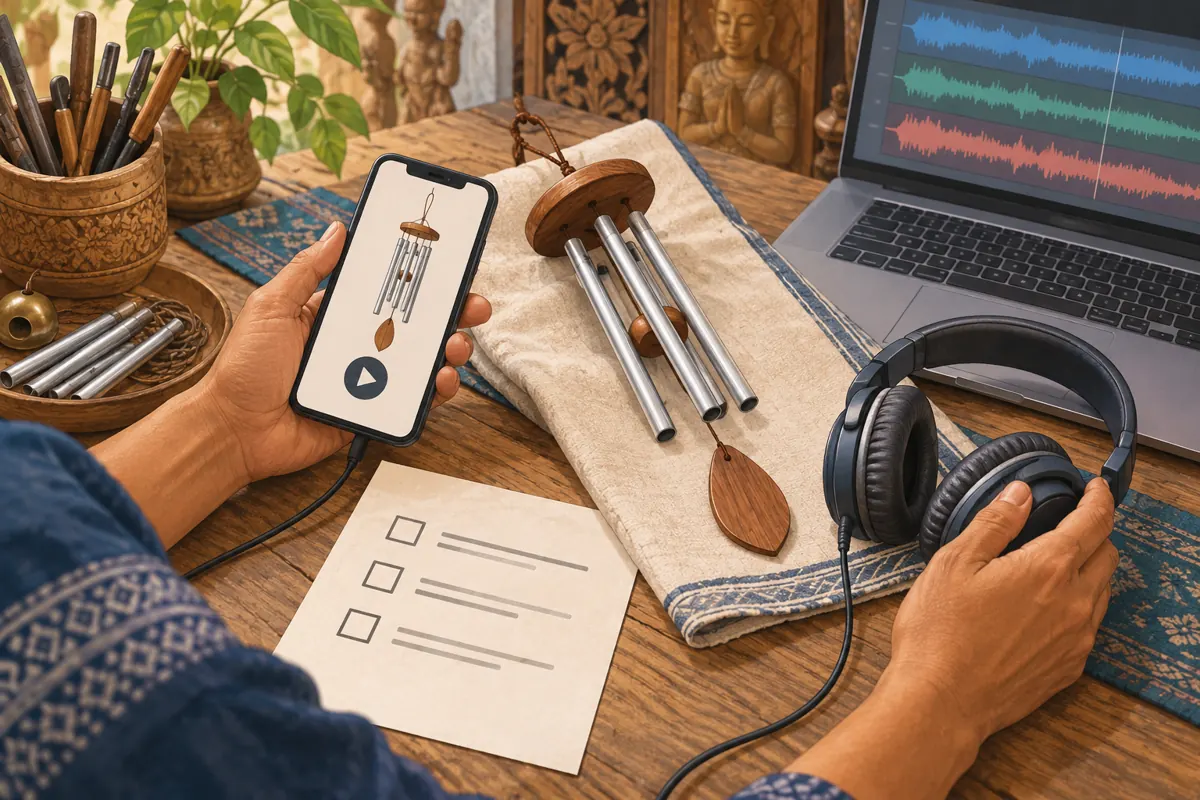
Ask a colleague who did not make the edit to watch without an explanation of what was changed. Give them concrete tasks: identify the model being played, describe when its sound starts and stops, and repeat the presenter's care instruction. Their answers can reveal a missing word or confusing transition that the editor overlooks because they already know the intended message.
Listen on headphones and an ordinary phone speaker at comfortable volume. This is a practical editorial check, not a laboratory comparison. Pay attention to clipped beginnings, abrupt silence and any moment where the sound no longer seems to match the visible movement. Keep playback volume consistent when comparing versions so that louder playback does not become a substitute for clearer audio.
Record specific observations rather than a vague approval. 'The bamboo knock is audible, but the model name is missing' creates a clear next action. 'Sounds better' does not establish whether a customer can choose the right product.
6. Record a clean replacement when necessary
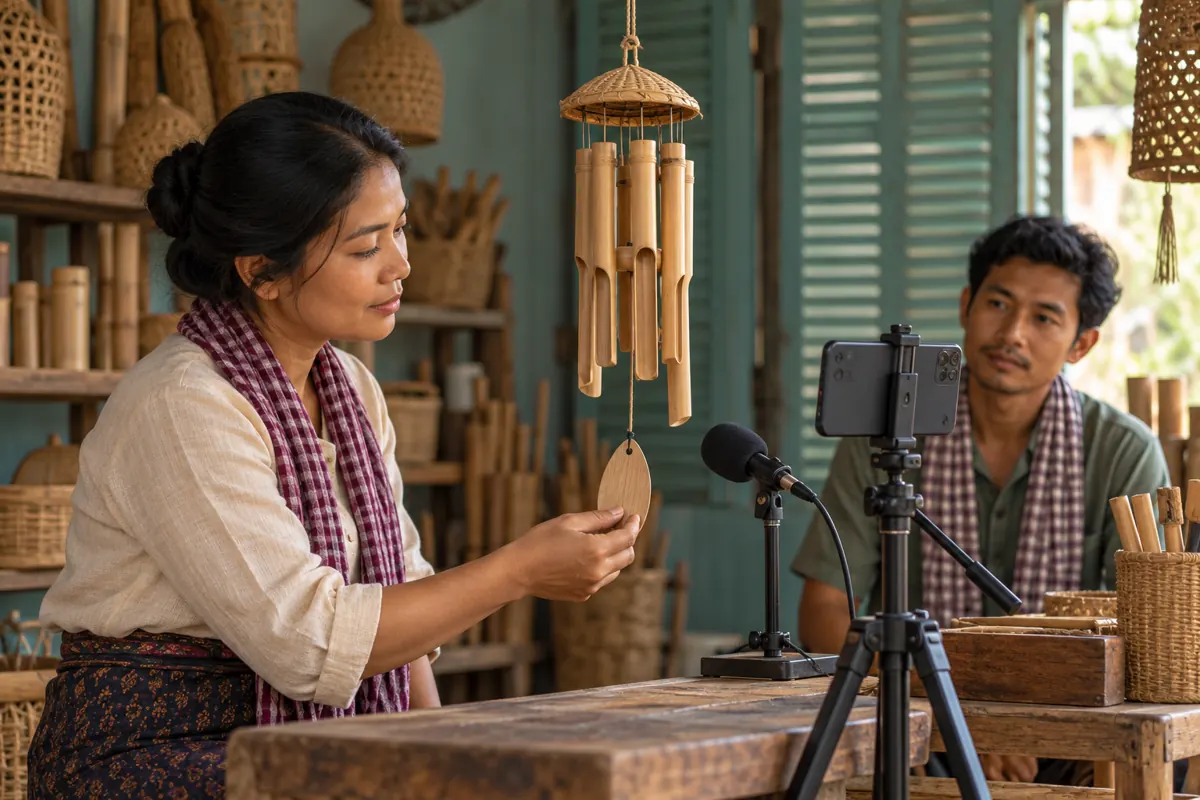
For a fresh take, choose a quiet period in the shop and switch off nearby music sources. Listen briefly before recording; a neighbouring speaker or another phone may still be audible. Keep the camera and microphone position reasonably consistent between models. Show the complete chime first, then demonstrate it with the same simple movement so viewers can follow the comparison.
Film the sound passage without talking over it. Record the Khmer explanation before or after, identifying the material and model in ordinary language. Explain that the sample was recorded in the shop and that listening devices and installation conditions affect what buyers hear. Avoid promises such as 'exactly this loud on every balcony.'
Retain a short pause after moving the wind catcher so the sound can fade naturally. Before packing away the product, play the take back and confirm that the intended model is visible throughout. This small check can prevent a second recording session caused by an unnoticed interruption or a mismatched item.
7. Match the promotional promise to the finished video
Review the title, description and planned social caption against the final footage. If the finished video demonstrates appearance and hanging hardware but no longer offers a usable sound sample, describe those remaining features accurately. A title promising a sound comparison should lead to an audible comparison, not a silent product montage.
For Cambodian buyers, make the enquiry route practical. State which model reference to send, whether the pictured item is a sample, and which pickup or delivery details the shop can actually confirm. Keep Khmer customer-facing wording natural even if internal file names use English model codes. Avoid adding unconfirmed stock or delivery promises during the audio repair.
If a newly recorded upload becomes the main destination, review the places where the shop controls its links: planned posts, product messages and saved response drafts. Where an older video remains available, clarify its purpose when necessary. Do not assume customers will discover the newer demonstration by themselves.
8. Review SMM-panel services as a separate decision
The supplied KhmerBoosting catalogue includes the exact listing 'YouTube Like ~ Max 5k ~ 5k/days ~ Instant ~ 𝗥𝗘𝗙𝗜𝗟𝗟 30D'. Its title presents a like-related offer, but the supplied description is empty. The title does not independently verify delivery speed, retention, audience origin or the method used. It also offers no basis for treating the service as audio repair, copyright clearance or official advertising.
YouTube prohibits artificial increases in views, likes, comments and other engagement metrics. It also states that a promoter's actions can affect the hiring channel. Review the proposed method against that policy rather than assuming a catalogue listing is permitted: https://support.google.com/youtube/answer/3399767?hl=en-419.
Do not order a service whose method artificially inflates engagement. If the method cannot be established, do not treat the uncertainty as approval. Purchased engagement is not evidence that Cambodian customers heard the chime, preferred its sound, received an advertisement or placed an order. A compliant promotion plan still needs an accurate demonstration and a useful next step for genuinely interested viewers.
9. Keep technical recovery separate from customer learning
Maintain two short records. The production record covers the sound issue, version reviewed, remaining limitations and approved destination. The customer-learning record covers genuine questions received about that destination. Useful questions might concern the hanging length, whether the wind catcher is included or whether a buyer can hear the model at the shop.
In a hypothetical follow-up, several customers ask whether the metal chime comes with its hook. That supports adding a clearer view of the included parts. It does not establish that the audio edit increased sales. Likewise, a changed public counter cannot tell the shop whether listeners understood the difference between materials.
Keep any panel transaction record separate from both conclusions. An order status describes a service transaction; it does not certify the demonstration's accuracy or explain customer behaviour. For a small shop, a brief dated note with concrete observations is more useful than a confident report built around unsupported causal claims.
10. Avoid the shortcuts that create a second problem
A common mistake is checking the picture while forgetting to listen. Another is accepting silence because the claim issue appears resolved, even though the caption still invites buyers to compare sounds. Both mistakes come from treating the platform notice as the complete editorial brief.
Also avoid changing several things at once without a record. Replacing the recording, rewriting the offer and switching the destination together can leave staff unsure which version a customer watched. Keep a simple change note that identifies the approved video and explains what buyers can now learn from it.
Finally, do not turn the repair into a claim of endorsement. A usable recording does not mean YouTube recommends the product, and an engagement counter does not mean customers approve of its tone. The strongest next step is concrete: let viewers hear an honest sample, identify the model and ask a relevant question.
Frequently asked questions
Should a wind-chime shop use background music at all?
Start with the purpose of the video. When buyers need to assess the chime, an uninterrupted product-sound passage is usually more useful than decorative music. A separate introduction can establish the setting, but it should not obscure the feature being demonstrated. Any music use also needs an appropriate rights review.
Can captions replace the missing chime sound?
Captions can explain the model, material and recording conditions. They cannot let a buyer hear the tone or fading ring. If the audio is absent, present the video as a visual guide and offer a separate honest sound sample or an opportunity to hear the item at the shop.
Is it acceptable to record the same model again?
Yes, a fresh demonstration can be the clearest editorial solution. Identify the actual item shown and use a straightforward recording setup. If you use a different sample of the same model, avoid suggesting that its recording proves every handmade item will sound identical. Keep the explanation proportionate to what the recording demonstrates.
What should staff say when a customer refers to the older video?
Identify which model and passage the customer means before sending another link. Explain plainly that the shop prepared a clearer sound demonstration, then direct them to the matching item. Answer their product question as well; a replacement link alone may not resolve uncertainty about size, included hardware or availability.
What is a useful result to record after promotion resumes?
Record observable outcomes such as a genuine request to hear a particular model, a question about installation or an enquiry containing the correct product reference. Keep completed purchases separately documented. These observations can guide the next demonstration without claiming that the audio repair caused every enquiry or sale.
Explore the current service catalogue, create an account, or ask a specific question through support tickets.
- YouTube Help: Remove copyright-claimed content from videos
- YouTube Help: Learn about copyright claims
- YouTube Help: Fake engagement policy
Prepared with AI assistance. Illustrations explain the workflow and do not represent customer results.