20/10/2026 23:20
Which Tile Sample Was That? Telegram Hashtags for Cambodian Tile Shops

A customer remembers a pale patterned tile from your Telegram channel but cannot remember when you posted it. Your assistant remembers the photograph but calls the design by a different name. Meanwhile, a new promotional post sends more visitors into the same confusing archive. For a Cambodian tile shop, a small hashtag system can make those photographs easier to retrieve. The useful outcome is a conversation about an identifiable product, followed by a separate stock check. This guide explains how to build that workflow, test it with staff and decide whether an SMM-panel service has any relevant role.
1. Start with the question customers actually ask
Review recent enquiries and identify the clues people use when looking for a sample. They may remember its colour, rectangular shape, approximate size or printed pattern. Staff may instead remember a supplier reference. Choose a system that connects those two perspectives. A customer should not need to learn your warehouse naming conventions before finding something worth asking about.
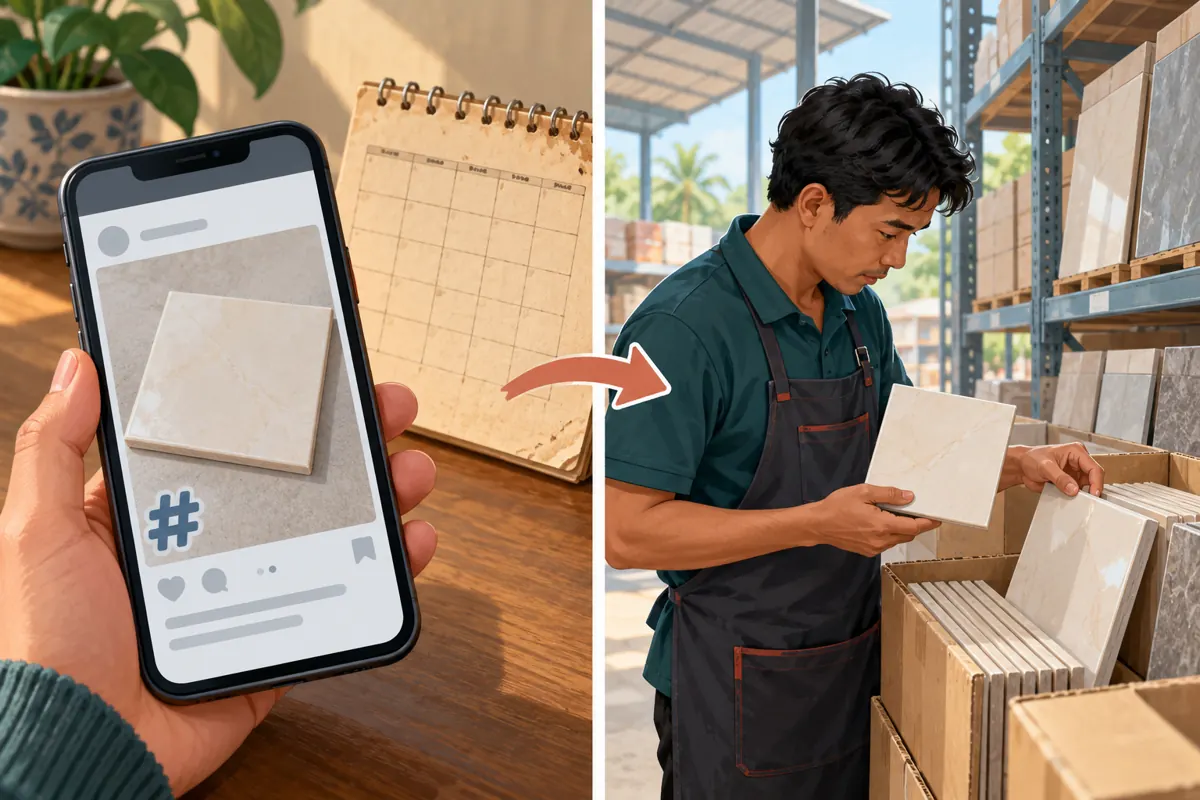
Consider a hypothetical shop in Siem Reap that posts tiles, grout and installation examples together. Its customers repeatedly ask for the grey square tile shown beside a wooden cabinet. The shop could create a broad grey-tile category and a separate product reference for that particular sample. The category helps browsing; the reference helps staff identify the item. Neither identifies the quantity currently available.
2. Use hashtags for retrieval without promising discovery
Telegram’s official “Message Effects, Hashtag Search, and More” announcement describes hashtags as a way to find messages across chats. It also describes a Public Posts view showing hashtag results from large public channels. That distinction matters: a tag can support navigation without guaranteeing that a small business will appear in public discovery results.
Open your shop’s channel and use its search function to test a proposed tag against your own posts. When tapping tags, check which search scope the app displays before giving customers instructions. Avoid telling buyers that every result belongs to your shop. The practical objective is a repeatable route from your channel to a relevant sample, not a promise of wider distribution.
Give visitors a short explanation of your system in a clearly named guide post. Explain what each category means and how to send a product reference to the shop. Test the instructions on the phones your team actually uses rather than relying on remembered button positions.
3. Choose a small, stable set of tags
Begin with three useful dimensions: product family, size and individual reference. In a hypothetical English-language demonstration, these could be #ShopGreyTiles, #Shop600x600 and #ShopT042. These are invented examples, not existing shop identifiers. Replace the prefix with a short identifier your business can maintain, and write the size with its unit in the ordinary caption.
Keep a shared reference list with the approved spelling, meaning and an example post for every tag. Decide whether a colour category describes the dominant colour or includes mixed patterns. Otherwise, one assistant may tag every tile containing grey while another uses the category only for plain grey designs.
Do not create a tag for every possible adjective. A long row of overlapping categories becomes difficult to maintain. Add a new category when actual enquiries reveal a useful distinction. For Cambodian customers, write explanations in the language they understand; a compact product code can remain consistent across Khmer and English captions.
4. Make the caption useful without the tags
A photograph and hashtag are not a complete product description. State the sample reference, dimensions and unit, visible finish, and what the photograph represents. Distinguish a shop sample from a supplier image or a completed installation. If you include a price, identify whether it applies per tile, box or another unit and when it was checked.
A hypothetical caption might read: “Sample T042: grey patterned tile, 600 × 600 mm. Photograph shows our display sample. Ask us to confirm current cartons, batch and price before travelling. Send T042 with your required quantity and pickup or delivery preference.” The approved tags would follow that explanation.
Keep technical suitability claims out of a category name unless you have supporting product information. A photograph of a tile in a bathroom does not establish its slip resistance or suitability for every wet area. Likewise, an attractive room photograph should not imply that matching stock is currently on your shelves.

5. Separate permanent identity from changing availability
A product reference should remain useful after a delivery sells out. A stock statement changes much more often. Keep those functions separate: use the reference to locate the design, then consult your current stock record before answering an enquiry. Avoid making a permanent category such as #Available the main route into an archive unless someone consistently maintains it.
In a hypothetical Phnom Penh shop, an older sample post leads a buyer to request replacement tiles. Staff find the reference but discover that the remaining cartons belong to another batch. The correct next step is to explain that difference and arrange a suitable comparison. Finding the photograph has resolved identification, not matching or availability.
When revising a post, make the current position clear in ordinary language and include a review date where helpful. Preserve a useful product identity instead of silently turning an old sample post into an advertisement for a different design. Customers may already have saved the original reference.
6. Audit a small selection before tagging the whole archive
Choose a manageable selection of frequently requested samples. Check that each photograph matches its reference, that dimensions agree with the product information, and that the category tags use the approved spelling. Resolve ambiguous images before making them easier to find. A neatly indexed mistake remains a mistake.
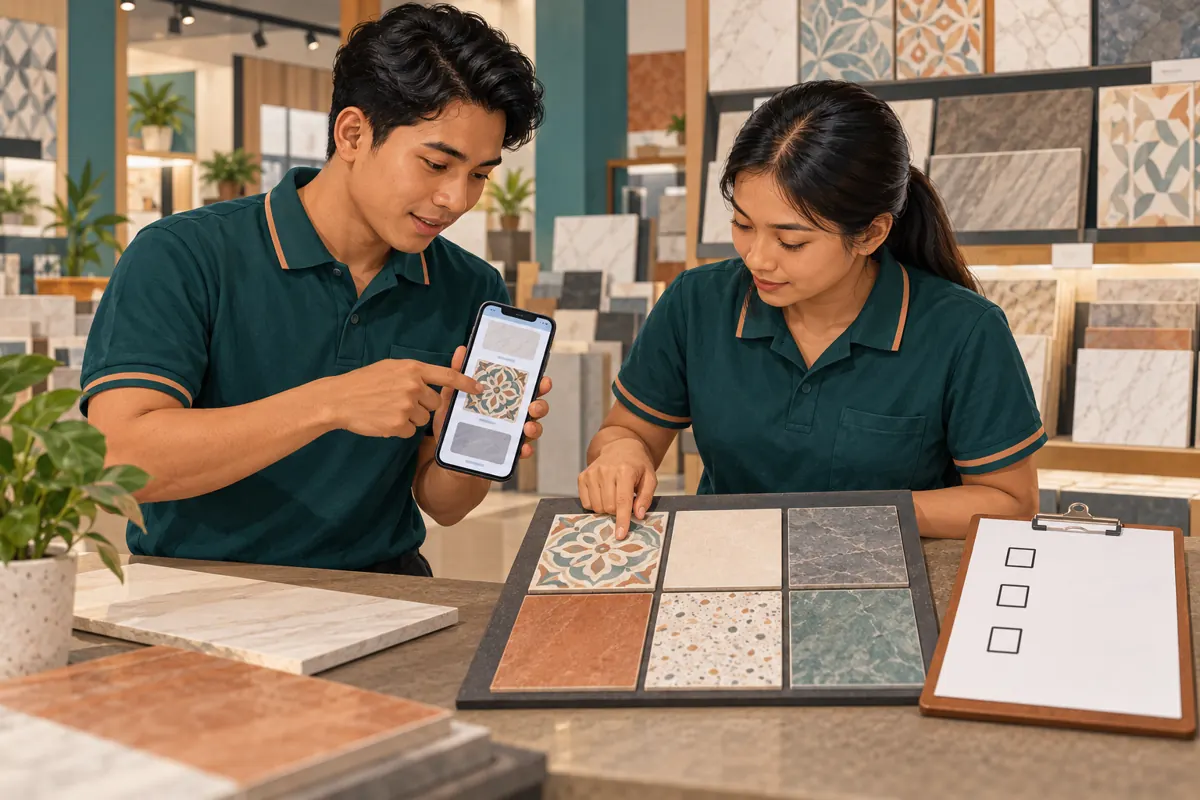
Ask a colleague who did not prepare the posts to complete three tasks: find a grey design, find a stated size and retrieve a specific reference. Give only the instructions a customer would receive. Record where the colleague hesitates, which result seems ambiguous and whether the caption explains what to do next.
If a search fails, inspect the tag and search scope first. If several products look interchangeable, improve their references or photographs. If staff can find the sample but cannot answer availability questions, repair the stock handoff. Expand the archive only after this small trial works reliably.
7. Promote a useful starting point
Once the sample collection is understandable, build a promotional message around a concrete customer task: finding a pattern, comparing dimensions or requesting a stock check. Send readers to the relevant guide or sample rather than making them scroll through unrelated deliveries. Include one clear next action.
For example, a hypothetical campaign for patterned tiles could invite customers to browse the category and send the chosen reference with their required quantity. A buyer arranging collection in Battambang needs a clear pickup location and confirmation process. Someone requesting delivery elsewhere needs a way to ask about destination and transport conditions. A hashtag cannot answer those logistical questions.
Keep customer details out of public sample captions. Names, private quotations and delivery addresses do not improve product navigation. Share the channel through places where people expect information from your business, and obtain permission before posting promotional material in another community.
8. Decide whether a panel service fits the problem
Before reviewing an SMM panel, state what remains unresolved. If customers cannot identify products, need clearer Khmer explanations or receive slow stock replies, buying a different visible metric does not repair that problem. Spend effort on the missing information or staff process first.
The supplied catalogue includes the exact listing “Telegram - Channel/Group Members ~ Max 1M ~ 𝐍𝐎 𝗥𝗘𝗙𝗜𝗟𝗟 ~ 50k/days ~ INSTANT” under “Telegram - Members [Bot Account]”. Its description is empty. The title presents a member service, while the category explicitly identifies bot accounts. This information does not establish Cambodian customer interest, product-search activity or enquiries.
Do not treat the title’s quantity, speed or timing wording as independently verified delivery evidence. Confirm the current written terms and relevant platform rules before any purchase decision. Purchased engagement is not evidence of genuine interest, sales, ad delivery or Cambodian users. For this archive workflow, choosing no panel order is a sensible outcome when no service addresses the actual need.
9. Measure whether conversations become clearer
Keep a modest enquiry log that records the sample reference requested, whether clarification was needed and what prevented the next step. Avoid collecting unnecessary personal information. Useful observations include a customer finding the correct design, a staff member confusing two sizes or an old caption causing an avoidable stock misunderstanding.
Telegram’s Channels FAQ explains that channel view counts are approximate and include views of forwarded copies. A view counter therefore cannot tell you how many distinct Cambodian buyers successfully used your tags. Report retrieval observations separately from channel totals and any purchased service records.
If enquiries become more specific after the changes, describe that observation cautiously. Staff training, new photographs or different stock could also affect conversations. You can still make a practical decision: keep categories that help people identify samples, revise confusing ones and remove categories that nobody can explain consistently.
10. Avoid the mistakes that make an archive unreliable
The most common maintenance failure is inconsistent naming. One person writes a size with a different separator, another introduces a second product code, and the same design becomes scattered across categories. Copy approved tags from the reference list and assign someone to review additions. Do not rename everything casually during a busy promotional period.
Another mistake is treating visual similarity as identity. Pale tiles photographed under different lighting can look alike, while the same tile can look different across photographs. Keep product references attached to the images and use physical samples or verified product information to resolve uncertainty.
Finally, avoid unrelated trending tags and repeated near-identical posts intended only to attract attention. They make your own collection harder to navigate. Maintain a useful sample record, review the information before re-promoting it and give customers an honest route from browsing to confirmation.
Frequently asked questions
Should our tags be in Khmer or English?
Choose terms your customers can understand and your staff can reproduce consistently. Explain categories in Khmer when that serves your audience, while retaining stable product codes across languages. Test the exact tags on the devices used by your team. Do not assume customers will guess an English technical term simply because it appears on a supplier carton.
Will a shop-specific hashtag guarantee public discovery?
No. A distinctive tag can make your own naming system clearer, but it is not a reserved brand identifier or a placement guarantee. Telegram’s official hashtag announcement describes public results from large public channels. Build your workflow around tested navigation within your collection and treat any broader discovery as separate from that practical purpose.
Should we remove a sample when its batch sells out?
Decide whether the post still helps identify a design customers may ask about. If it does, clearly explain that the pictured batch is unavailable and that any alternative requires confirmation. If the post is misleading and has no continuing reference value, remove or replace it thoughtfully. Do not leave an old availability claim unqualified.
Can hashtags replace an inventory spreadsheet?
No. They help retrieve posts; they do not establish available cartons, reservations, batch details or delivery commitments. Keep an inventory record appropriate to the shop and check it when answering an enquiry. The public sample reference should connect the conversation to that record without exposing internal customer or supplier information.
What should we improve before spending on promotion?
Have someone find a sample, identify its reference and explain how to request current availability without coaching. If any step fails, fix that step first. When the route works, promote the relevant starting point with a clear message. Judge the resulting conversations by their usefulness, not by an unsupported assumption that larger counts represent local buyers.
Explore the current service catalogue, create an account, or ask a specific question through support tickets.
Prepared with AI assistance. Illustrations explain the workflow and do not represent customer results.